

The price gap is one of the most interesting technical analysis events that traders pay attention to. When the price of a stock opens much higher or lower than its last closing price, a "gap" appears on the chart. If you know how to read and trade gaps, they can be great chances for traders.
In this blog, we'll talk about what gaps are, why they happen, the different kinds of gaps, and most importantly, the gap trading strategies that traders use in the stock market, using real examples from Indian stocks.
What is a gap in the stock market?
A gap is the space on a chart where no trades have taken place. For instance:
If Infosys closed at ₹1,500 the day before and then opened at ₹1,580 today because of good results, the ₹80 gap makes a gap up.
If bad news causes the stock to open at ₹1,420, on the other hand, it creates a gap down.
These gaps are usually caused by sudden changes in sentiment, which can be caused by earnings, economic news, world events, or big changes in supply and demand.
Different kinds of gaps
Before putting trading strategies into action, it's important to know about the four most common types of gaps:
1. Common Gap
Usually small and happens in sideways markets.
They usually get filled quickly (the price goes back to the gap).
For instance, a stock that is trading between ₹200 and ₹210 could open at ₹208 instead of ₹206.
2. Gap that breaks away
When the price breaks out of a consolidation or a major support or resistance level, this happens.
Starts a new trend.
For example, Nifty broke through resistance at 22,000 with a strong gap up.
3. Runaway (or Measuring) Gap
Found in the middle of a strong trend.
Indicates continuation of momentum.
Example: Reliance going up and making a gap in the middle.
4. Gap of Exhaustion
Happens close to the end of a trend.
Shows a possible change in direction as buying and selling pressure eases.
For example, a small-cap stock gaps up after a long rally, only to gap down sharply.
What Causes Gaps?
Here are some of the main reasons:
Earnings reports (earnings that are better or worse than expected).
The Dow Jones and Nasdaq are affecting Indian stock markets.
Actions taken by the government or the RBI.
M&A news, new products, or a change in management.
Market sentiment—fear and greed make reactions bigger overnight.
Strategies for Trading Gaps
Now let's talk about some real-world trading strategies that people use to make money from gaps:
1. The Gap and Go Strategy
Used mostly for gap ups with a lot of volume.
Traders take positions in the direction of the gap, hoping it will keep going.
Best with gaps that break away.
For example:
A trader can buy long if HDFC Bank opens with a 3% gap up on high volume after good earnings. They should put a stop loss below the gap zone.
2. Strategy for Filling Gaps
Because "most gaps get filled."
Traders bet that the stock will return to its previous close.
Good for regular gaps and sometimes exhaustion gaps.
For example:
If TCS closes at ₹3,600 and opens at ₹3,660 but can't hold purchases, traders short with the goal of ₹3,600.
3. Strategy for Confirming a Breakout
Wait for price action confirmation before trading.
Useful when you're not sure if the gap is real or not.
Steps:
1. Wait 15 to 30 minutes after the market opens.
2. If the stock stays above the gap with volume, go long.
3. If it goes the other way, do the opposite trade.
4. The Gap and Volume Strategy
Volume is what makes gap trading work.
Big gaps with a lot of volume mean that the trend will continue.
Big gaps with low volume are likely to fill.
5. Strategy Based on Risk and Reward
Always put your stop loss near the gap zone.
Before you enter, make sure the risk-reward is at least 1:2.
For example:
If a stock goes from ₹500 to ₹520 in a gap, the stop loss can be set at ₹498 (below support) and the target can be set at ₹550.
Important Rules for Gap Trading
1. Look at the news before the market opens to see why the gap happened.
2. Use Volume Confirmation—Don't trade gaps without checking them first.
3. Use more than one indicator. For example, RSI and MACD together with gap signals make it stronger.
4. Time Your Entry: Don't jump in right away; wait for confirmation unless it's a clear breakaway.
5. Protect Your Capital—Always use a stop loss because gaps can quickly turn around.
A Real Example from the Indian Market
Infosys said in July 2024 that its quarterly earnings were lower than expected.
The stock closed at ₹1,540 and opened the next morning at ₹1,460 (a gap down).
Traders who used the gap fill strategy shorted at about ₹1,460, with a goal of reaching ₹1,540.
In two sessions, the stock went back to where it was before, filling the gap and making a lot of money.
What are the benefits of gap trading?
Chance to make money fast.
Works in both bull and bear markets.
Can be used for stocks, indexes, and even commodities.
The Risks of Gap Trading
False gaps can surprise the trader.
High volatility means that the stop loss is more likely to be hit.
Needs discipline and quick choices.
Final Thoughts
Gap trading is one of the most exciting ways to do technical analysis. Traders can find high-probability setups by learning about different types of gaps, figuring out why they happen, and using strategies like Gap and Go, Gap Fill, and Breakout Confirmation.
But the golden rule stays the same: don't blindly follow every gap. Before you get in, always look at the bigger market's volume, news, and mood. With good risk management, gap trading can be a very useful tool in your trading toolbox.
Gap Trading Strategies in Stock Market

Comments
Related posts
Technical analysis offers traders several indicators to understand market momentum, trend, and potential reversals. Two of the most popular indicators ....
In the world of financial markets, investors use different methods to make decisions about buying and selling assets. One of ....

Learn to recognise the difference between a trending and a sideways market with simple, practical signs on the charts before ....
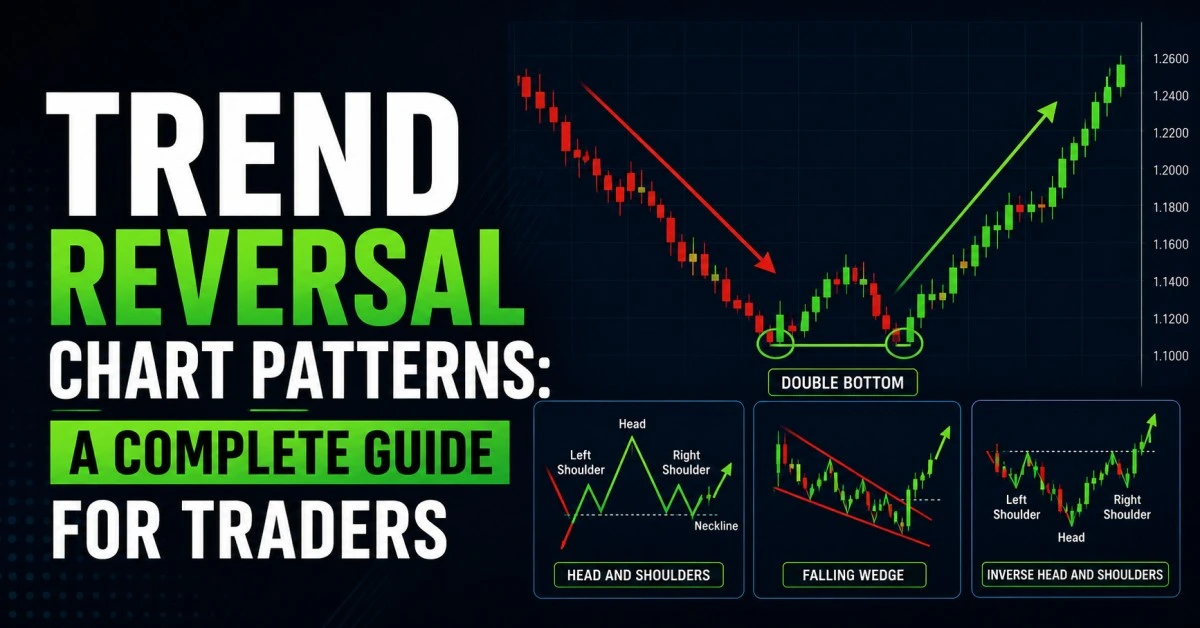
In the stock market, identifying the right trend at the right time can make a huge difference in trading success. ....

Learn about the TEMA Indicator (Triple Exponential Moving Average), including its formula, advantages, strategies, settings, and how traders use it ....