

Quantitative Trading: A Better Way to Trade
When you think of trading, you might picture people looking at screens, following charts, and making quick choices based on what they feel is right. But there is another way to trade that is more scientific, less emotional, and based on data. People call this "Quantitative Trading" or just "Quant Trading."
What does it mean to trade quantitatively?
Instead of going with your gut, quantitative trading uses math, data, and computer programs to make decisions. A quant trader looks for patterns in past price changes, trading volumes, and even news about the economy. Then, they use computer algorithms to make trades happen quickly and easily.
To put it another way, imagine you want to guess when it might rain. You don't just look at the sky and guess; you look at years of weather data, build a model, and then use that model to make accurate predictions. Quant trading is the same thing, but for money markets.
In short, quant trading doesn't guess; it uses evidence.
What are the benefits of Quant Trading?
Logic, Not Feelings
Fear and greed can make people who trade go too far. Quant models follow the rules.
Try It Out Before You Trade
You can "backtest" a strategy on old market data to see how it might have worked without putting your own money at risk.
Execution at lightning speed
Computers can find and take advantage of opportunities in a matter of milliseconds, which is something people can't do.
Don't work harder, work smarter.
You can use your strategy in different markets and at different times once you make it.
Steadiness
Because the rules are set, the strategy always makes the same trades.
Gives You New Options
You can find patterns that people would never see with quant trading by using advanced tools like machine learning, artificial intelligence, and big data.
Quant Trading in the Real World
Hedge Funds and Institutions: Big names like Citadel and Renaissance Technologies depend a lot on quant strategies. Their success stories show how effective this method can be.
Everyday Traders: Even individual traders use quant techniques, such as making a bot that buys a stock when it drops by a certain amount and sells it when it goes back up.
In the 24/7 crypto market, quant trading bots are often used to make money off of price changes while traders are sleeping.
How do you become a quant trader?
Here's a guide to help you get started if you're interested in this world:
Learn the Basics of Statistics and Math
Don't worry; you don't have to be a genius. Just get used to ideas like averages, data patterns, and probability. These are the tools that help you find chances.
Learn how to code
Python is the easiest language for beginners to learn and is used a lot in finance. You can use it to look at data, try out different strategies, and make trading bots. A lot of people also use R and C++, but Python is a great place to start.
Learn about financial markets
Find out how the stock market, the foreign exchange market, the commodities market, or the cryptocurrency market work. You don't have to know everything at once. Just start with what interests you. The first step is to know how and why prices change.
Play with the data
Try looking at past stock prices and figuring them out. You can use tools like Excel, Python's Pandas library, or even free websites like Yahoo Finance to help. The goal is to get used to working with data.
Try out different strategies
Try simple things, like a moving average crossover (buy when the short-term average goes above the long-term one). Check how it did with past data. You can try more advanced strategies as you get better.
Begin Small
Start with paper trading (fake money). Start with small amounts of real money when you feel ready. This lets you get real experience without putting yourself in too much danger.
Pay attention to risk management
If you don't manage risk, even the best quant models can lose money. Learn about stop-losses, how to size your positions, and how to spread your investments out.
Keep learning and stay up to date.
Quant trading changes quickly. There are always new algorithms, faster technology, and different data sources. Read books like Quantitative Trading by Ernest Chan, follow finance blogs, or join online groups.
Think About Your Career Options
A lot of quant traders work for hedge funds, investment banks, prop trading firms, or fintech startups. Some people make their own systems for trading on their own. The skills are useful in a lot of fields, not just finance.
What You Need to Know to Be a Quant Trader
Analytical Mindset: You can think logically and solve problems.
Knowledge of programming languages like Python, R, or others for making models.
Math and statistics help you find patterns and test your ideas.
Market Knowledge: Knowing how different types of assets act.
Patience and Discipline: Not every plan works right away; you may need to make changes and improvements.
Problems with Quant Trading
It's important to be honest. Quant trading is fun, but not simple:
Problems with Data Quality: Your model won't work if your data is wrong or missing.
Overfitting: A strategy may look great on past data, but it doesn't work in real life.
Competition: The space is mostly filled with big companies that have cutting-edge technology.
Costs: If you don't optimize your trading, it can cost a lot of money to do it often.
But you can get through these problems if you keep trying, learn from your mistakes, and plan ahead.
Last Thoughts
Quantitative trading may sound complicated, but at its core, it's just about using data to make better decisions instead of letting your feelings guide you. Quant trading could be a fun journey for you if you like working with numbers, love solving problems, and are interested in finance.
The best part is that you don't have to start big. Start small, learn one thing at a time, and you'll slowly get the skills you need to trade like a quant. Anyone who wants to learn can get into the world of quantitative trading, whether they want to work at a top hedge fund or just get better at trading on their own.

Comments
Related posts

Positional trading means holding a trending stock for weeks or months instead of hours. This guide follows one trade week ....

Momentum trading means trading in the direction of a strong, confirmed price move. This guide explains how it works with ....
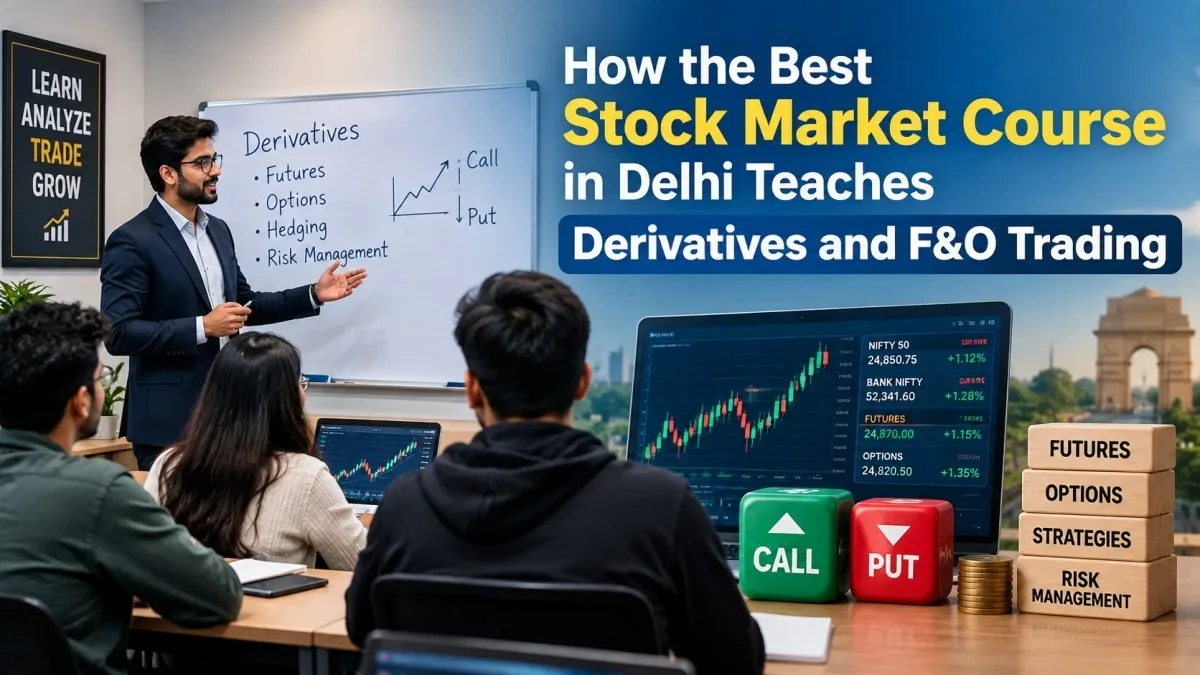
SEBI's FY2022–FY2024 study found that 93% of individual F&O traders incurred losses. This guide explains what a derivatives curriculum needs ....

Most beginners start with YouTube videos and end up more confused than when they began. The best stock market course ....

Compare online vs offline stock market courses based on flexibility, practical training, mentorship, cost and learning support. Discover which learning ....