Because natural gas distribution companies operate critical energy infrastructure, developments in global gas markets can influence investor sentiment toward energy sector stocks.
Why LPG Gas News and Supply Discussions Are Trending in India
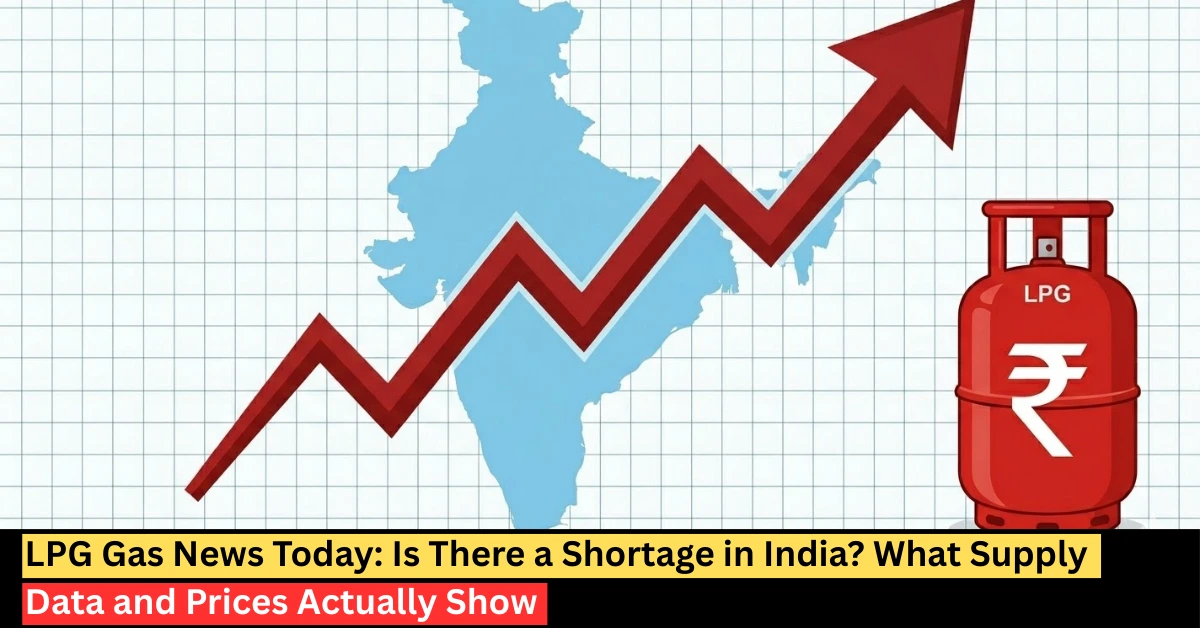
In recent days, discussions about LPG gas supply in India, LPG gas price today, and possible LPG shortage concerns have attracted widespread attention among households, businesses, and financial markets. As global energy markets react to geopolitical developments, many consumers have started searching for answers to questions such as whether there is an LPG shortage in India, why LPG gas prices increase, and whether international conflicts could influence domestic fuel availability.
Liquefied Petroleum Gas (LPG) remains one of the most widely used cooking fuels in the country. Millions of households rely on LPG gas cylinders for daily cooking, while LPG is also used for food preparation in restaurants, hotels, and commercial kitchens. Due to such extensive use, any news pertaining to fuel availability or fuel pricing is considered a matter of national importance.
Simultaneously, the growing importance of natural gas and city gas distribution networks in India’s energy system has attracted potential investors. Global energy market developments often shape the conversations about both LPG supply and natural gas infrastructure.
What Is Driving Concerns About LPG and Natural Gas Supply
Global energy markets operate through an interconnected system, meaning developments in one region can influence supply chains and pricing in other parts of the world. The recent geopolitical tensions related to energy corridors have raised questions related to the potential of natural gas shipment disruptions.
The recent reports of fires and conflict in Israel have generated concern in global energy markets. Given India’s natural gas imports through the sea routes that are currently geopolitically sensitive, there are concerns about possible supply disruptions.
This has led many consumers to search for information related to LPG shortage, LPG gas crisis, and LPG cylinder availability, even though such discussions do not necessarily indicate an actual shortage.
Why Natural Gas News Is Creating Public Anxiety
In a few isolated instances, businesses that rely heavily on gas supply have faced operational challenges when deliveries were delayed. Some reports suggested that a canteen at Delhi Airport was temporarily unable to cook food due to a delay in gas supply. Similarly, catering services connected with railway operations such as IRCTC have reportedly considered contingency plans if gas supply logistics become uncertain.
The issues surrounding the stability of natural gas supplies and LPG gas have furthered the conversations on the subject. Nonetheless, these instances are more of localized disruptions rather than a national LPG shortage.
The fast flow of information on social media sites tends to hammer home these worries and more people become concerned about the availability and pricing of LPG.
How Consumer Behavior Is Responding to Gas Supply Concerns
Whenever discussions about fuel supply appear in the news, consumer behavior can change as households begin preparing for potential disruptions. Online marketplaces and quick-commerce platforms have reported increased demand for induction cookers and electric cooking appliances.
Swiggy and Blinkit have claimed an increase in the search and sales of electric cooking devices, with some devices going out of stock temporarily. This illustrates that customers in some capacity are searching for different cooking solutions.
Clearly, these responses are precautionary in nature, and demonstrate how closely these reactions are tied to the everyday life of people in India and a stable supply of LPG and natural gas.
Why LPG Gas Prices Sometimes Increase
Another common question asked by consumers is why LPG gas price hikes occur from time to time. LPG prices in India are influenced by a combination of international and domestic factors including crude oil prices, global LPG benchmark rates, shipping costs, and currency movements.
When global energy prices rise, the cost of importing LPG can increase. This may occasionally lead to adjustments in LPG cylinder prices.| Factor | Influence on LPG Price |
| Global crude oil prices | Higher crude prices raise LPG production and import costs |
| International LPG benchmark | Determines base price for LPG cargo imports |
| Currency exchange rate | A weaker rupee increases import expenses |
| Freight and shipping costs | Transportation costs affect LPG delivery prices |
Because of these factors, consumers often search for today’s LPG gas price whenever global energy markets experience volatility.
How LPG Gas Comes to India
India fulfills its demand for LPG through a combination of domestic production and imports. LPG is produced as a byproduct of crude oil refining at domestic refineries. However, domestic production alone is not sufficient to meet the country’s growing demand.
To maintain stable supply, India imports LPG from several global suppliers.
| Import Source | Role in India’s LPG Supply |
| Middle East countries | Largest exporters supplying LPG shipments |
| United States | Growing supplier of LPG cargo |
| African and other global producers | Supplemental supply through spot imports |
This diversified import structure helps ensure that LPG supply remains stable even when global energy markets experience temporary fluctuations.
Who Confirmed the Current LPG Supply Situation
Amid rising speculation about LPG availability, RK Gupta, Vice-President of the Indian LPG Association, clarified that there is currently no shortage of LPG cylinders in India.
The Association has stated that there are sufficient stocks of LPG and that the entire Distribution network is operating normally. They have also urged consumers not to panic and book multiple cylinders, as unnecessary bookings can disrupt the flow of bookings and affect the efficiency of the Distribution network.
This statement provides reassurance to the public that the supply of LPG is stable throughout the country.
How Natural Gas News Is Influencing the Stock Market
The impact of fuel supply on various parts of the economy is why news on energy fuels becomes the focus of attention in the financial markets. Investors tend to focus on firms related to the natural gas value chain and the city gas distribution business, as they respond to changes in the global energy landscape.
Some companies operating in India’s gas ecosystem include GAIL, Adani Total Gas, and Gujarat Gas.
These companies operate pipeline networks and gas distribution systems that supply fuel to industries, transportation networks, and urban households.
| Company | Primary Role | Market Significance |
| GAIL | Natural gas pipeline transmission | One of India's largest gas infrastructure operators |
| Adani Total Gas | City gas distribution | Expanding CNG and PNG network |
| Gujarat Gas | Industrial gas supply | Serves major manufacturing clusters |
Because of their role in supplying energy infrastructure, these companies often attract investor attention whenever global energy markets become volatile.
What Is the Present Situation of LPG Supply in India
As of now, India's LPG supply system is fully operational. The country's distribution network is made up of refineries and bottling plants, as well as transport and distribution systems that deliver LPG cylinders to millions of homes.
According to industry representatives, adequate LPG stocks are available across the country. While discussions about energy supply have increased public attention, the current situation indicates that LPG cylinders remain available for households and commercial users.
Pros and Cons of India’s LPG and Natural Gas Ecosystem
India’s LPG distribution system has several strengths. One major advantage is the country’s extensive distribution network, which ensures that LPG cylinders reach even remote areas. Another strength is the diversified import structure, which reduces reliance on a single energy supplier.
Simultaneously, some challenges persist. As India imports some of its LPG and natural gas, international fuel price fluctuations and geopolitical changes can impact domestic pricing trends.
Nonetheless, ongoing challenges indicate that further development of energy infrastructure will bolster India’s energy security in the long run.
What the Future of LPG and Natural Gas Supply May Look Like
In the coming years, it is anticipated that India will continue the construction of gas infrastructure such as new LNG import terminals, pipelines, and city gas distribution networks. Policies from the Government of India aim to increase the contribution of natural gas to the country’s energy mix.
Increased accessibility of fuels, as well as the stability of supply of LPG and natural gas across the country, will strengthen as a result of such development.
Conclusion
Recent discourse on the global supply of natural gas and consequent geopolitical changes has compelled a number of consumers to seek out information on potential shortages and price fluctuations of LPG in India. However, officials from the industry have stated that there is, in fact, no overall shortage of LPG, and that LPG cylinders remain accessible via the established distribution systems in India.
With the ongoing changes in global energy markets, the varied sources of imports coupled with the growing gas infrastructure in India is likely to ensure continued supply of LPG and natural gas to households, businesses and industries in the country.
Understanding Energy Markets and Financial Trends
LPG supply talks, importation of natural gas, and fluctuations in pricing of energy from all over the globe are developments that impact the economy and financial markets. Energy infrastructure, global commodity pricing, and supply chain events can affect certain sectors, profitability of companies, and, at times, the overall mood of the stock market.
A person seeking insight into the impact of global events on financial markets would appreciate the need for some systematized financial education. The National Institute of Securities Markets conducts certification courses that are known and respected in the financial services industry in India. These courses provide fundamentals of market structure, governing regulations, and the principles of investing.
The ICFM – Institute of Career in Financial Markets offers structured NISM exam preparation programs designed to help students and professionals build a deeper understanding of financial markets, trading mechanisms, and the economic factors that influence market movements.
Through guided learning modules, participants explore topics such as market regulation, equity and derivatives trading, and risk management while preparing for NISM certification exams.
Disclaimer:
The information in this article is not intended to provide any financial or investment advice of any kind, therefore, readers need to do their own due diligence before acting on any financial decision.
Frequently Asked Questions About LPG Gas Supply in India
Is there an LPG shortage in India right now?
No, there is currently no nationwide LPG shortage in India. According to the Indian LPG Association, adequate LPG stocks are available and the distribution system continues to operate normally. Authorities have advised consumers not to panic-book multiple LPG cylinders because unnecessary bookings can temporarily affect supply logistics.
Why are people searching about LPG shortage in India?
The spike in interest in searches regarding LPG shortages in India coincided with the conversations around global natural gas supplies and the geopolitical shifts involving energy supplies. Supply disruptions in certain regions and news concerning international fuel pathways also fuelled the public interest.
Why does LPG gas price increase in India?
LPG prices change primarily because of global crude oil prices, international LPG benchmark rates, exchange rate movements, and transportation costs. Since India imports part of its LPG supply, fluctuations in global energy markets can influence the cost of LPG cylinders.
What is the LPG gas price today in India?
Today, prices for domestic LPG cylinders differ from city to city due to differences in the costs of transport and distribution. Oil marketing companies update domestic LPG cylinder prices periodically, in accordance with international fuel prices and government regulations.
From where does India import LPG gas?
India imports LPG mainly from Middle Eastern countries such as Saudi Arabia, Qatar, and the UAE, along with increasing supplies from the United States and other global energy producers. These imports supplement domestic LPG production to meet the country’s growing demand.
How does LPG gas reach households in India?
LPG gas arrives at homes thanks to a complex distribution system comprising refineries, bottling plants, transport, and local distributors. LPG marketing companies fill the cylinders at the bottling plants and distribute them through the contracted distributors within the urban and rural localities.
Can global conflicts affect LPG supply in India?
India's domestic infrastructure and diversification of LPG supply sources mean that even with fluctuations LPG supply is stable in the domestic market. Although global geopolitical tensions can alter international energy markets and shipping routes, and thus LPG prices and logistics, India’s diversified LPG import sources and domestic distribution infrastructure help maintain stable supply even during global energy market fluctuations.
Which companies are connected to natural gas supply in India?
Several companies operate within India’s natural gas infrastructure and city gas distribution ecosystem, including GAIL, Adani Total Gas, and Gujarat Gas. These companies supply natural gas through pipelines and urban distribution networks.
Will LPG demand increase in the future?
Energy analysts predict that due to changes in household energy consumption, urbanization, and population growth, the demand for LPG in India will continue to increase. However, the long-term consumption of LPG may be influenced by the development of natural gas infrastructure and initiatives for cleaner energy.