
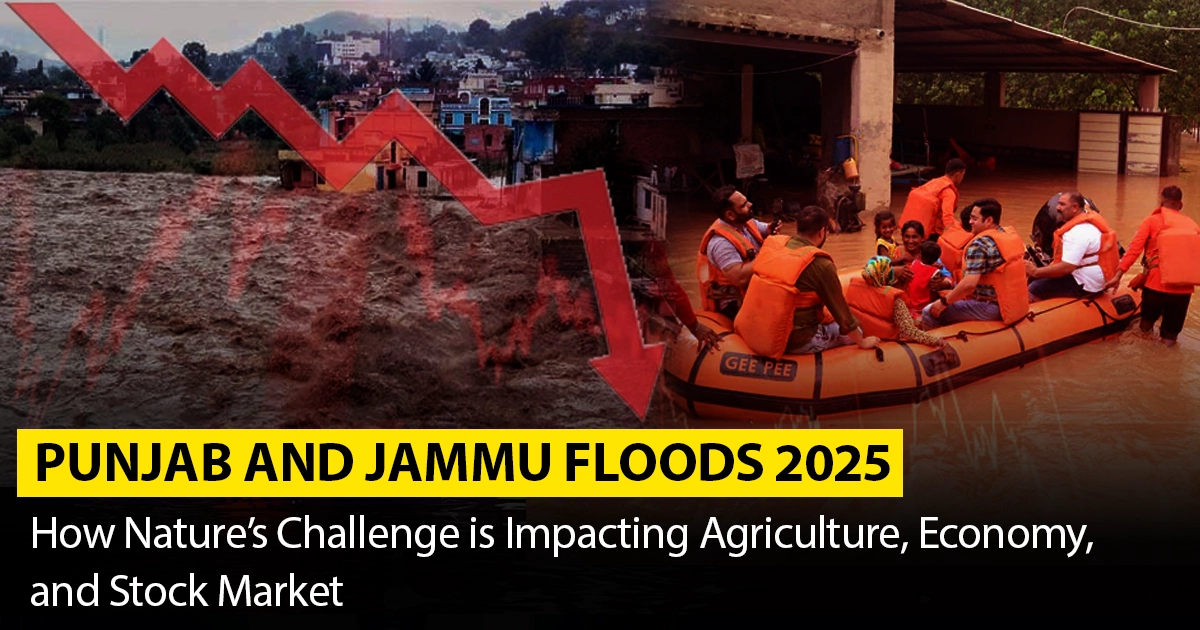
When Nature Shapes Markets: An Introduction
India has had a lot of trouble in 2025 because the northern states of Punjab and Jammu are having terrible floods. For millions of people, this means that daily life, farming, and making a living in the community will be affected. It means more than just a natural disaster for the country. These two areas are very important to Indian farming. Punjab is known as India's breadbasket because it grows a lot of rice and wheat every year. Jammu, on the other hand, grows corn, pulses, and fruits and vegetables like apples and walnuts. When floodwaters cover these rich lands, the effects are felt far beyond the nearby villages. The effects can be seen in food prices, export flows, inflation, and finally the stock market.
We at ICFM India (Institute of Career in Financial Market) think that these kinds of events should be studied in depth. This is not only because they show how fragile human lives and livelihoods are, but also because they show how natural and financial systems are linked. Floods in Punjab and Jammu aren't just news stories; they're also lessons for investors, traders, and regular people who want to know why food prices go up, why stocks suddenly change, and how the government deals with natural disasters.
Punjab: The Breadbasket Under Stress
Since the Green Revolution, Punjab has been the center of India's food economy. Its huge green fields grow rice and wheat that feed millions of families all over the country. It also makes basmati rice, which is one of India's best exports and is sent to kitchens in the Middle East, Europe, and the United States. Floods in Punjab not only hurt farmers' crops, but they also make it harder for the country to get food and keep its export promises.
In 2025, heavy rains and rivers overflowing caused a lot of water to collect in Punjab's rice fields. Paddy is a crop that needs water but also needs good drainage. When fields stay flooded for a long time, it hurts the crop. Farmers don't know how much they'll get, procurement agencies are having trouble getting grains, and exporters are under pressure to meet international contracts. The world market has already reacted. Reports say that the price of basmati has gone up by almost $50 per tonne because buyers think there will be less supply from India. International traders are starting to look to competitors like Thailand and Pakistan to fill the gap. This shows how quickly a natural disaster in one state can change the prices of goods around the world.
Jammu: Maize and Horticulture in Danger
Punjab is known for its grains, but Jammu is also important for farming. Farmers in the area grow corn, beans, and a wide range of fruits and vegetables, especially apples and walnuts. Jammu's maize is very important because it helps the poultry and livestock feed industry, which affects the prices of chicken, eggs, and dairy products in northern India. Apples and walnuts, on the other hand, are important sources of income for farming families because they not only meet domestic demand but are also sent abroad.
The floods in Jammu have ruined a lot of corn fields and messed up the supply chains for horticulture. Prices for maize are already going up in wholesale markets, and poultry farmers are worried about how much more it will cost to feed their animals. Apples and walnuts, which need to be moved to markets on a regular basis, have been delayed and damaged. The floods make things very uncertain for farmers who rely on this income every year. The damage to Punjab's rice and Jammu's corn and horticulture is bad for the economy because it puts stress on many types of food at the same time.
The Effects of Floods on the Economy
Floods are not only natural disasters; they are also events that affect the economy. The first and most obvious effect is that food prices are going up. When rice, corn, vegetables, or fruits are hard to find, their prices go up in both wholesale and retail markets. In Delhi, Chandigarh, and other northern cities, for example, vegetable prices have already gone up because fewer vegetables have come from Punjab and Jammu. Families feel this in their budgets because necessities take up a bigger part of their income.
Food prices going up also affect what the government does. Policymakers keep a close eye on these trends because inflation affects more than just consumers; it also affects interest rate decisions, subsidies, and buying strategies. Food prices going up too much can slow down the economy by making it harder for families to spend money.
Industries that are related to farming are also affected. Companies that make packaged staples or food items may have to pay more for raw materials. After floods damage crops that are already growing, fertilizer and seed companies may see an increase in demand for re-sowing. Insurance companies will get more claims for crop insurance, and rural banks may have to change the terms of farmer loans to keep them from defaulting. At the same time, infrastructure and logistics companies could get contracts to fix roads, bridges, warehouses, and irrigation canals that were damaged by the floods. Floods make things hard and give people chances in the economy.
What the stock market did
Such events have a big effect on the Indian stock market. Floods may not cause the major indices like Nifty 50 and Sensex to crash overnight, but stocks in certain sectors and themes often move a lot. For instance, when floods or droughts hit farming, investors keep a close eye on companies that make fertilizer, seeds, and irrigation equipment. These businesses might do better in the short term because there is more demand. On the other hand, FMCG companies that depend on stable raw material prices may have trouble with their margins and investors may not be as interested in them.
Sometimes, infrastructure and logistics stocks do well in the medium term when rebuilding projects start. Both domestic and foreign investors keep a close eye on these changes because they show not only short-term risks but also long-term changes in sectoral opportunities. For instance, when basmati exports are stopped, it not only hurts farming but also affects India's trade balance and the flow of foreign currency into the country. These are things that investors look at when they study the stock market.
Floods give traders short-term chances. Sharp changes in agri-linked stocks make it possible to speculate and move quickly. But for long-term investors, the lesson is to be strong and spread out their investments. A portfolio that is spread out over many sectors can handle the shocks of natural disasters better.
Relief, Recovery, and the Push for Strength
The governments, local administrations, and community groups in Punjab and Jammu have already started relief work. They have set up camps, given out basic needs, and surveyed the damage to crops. People are talking about giving farmers special credit and compensation packages, and they are trying to make sure that seeds and fertilizers are available for replanting when they can.
The focus is also shifting to technology and resilience, not just immediate help. Drones are being used to map areas that have been hit by floods, and satellite data is being used to figure out how much crop loss there has been. Experts are asking for farming methods that can handle extreme weather and are good for the environment. Putting money into better drainage, irrigation systems, and stronger embankments is becoming a top priority for policymakers.
This is a new trend for investors. Companies that work in agri-tech, irrigation, and infrastructure for adapting to climate change are likely to become more important. Floods like the ones in Punjab and Jammu make both policymakers and markets realize how important it is to have systems that can last and adapt.
ICFM India's Point of View: Now Is the Time to Stand Together
ICFM India sees this moment with a lot of compassion and responsibility. We are firmly with the people of Punjab and Jammu during this hard time. It's not just about looking at how the market moves; it's also about understanding the human side of economics. The story of farmers, families, and workers who make up the backbone of India's economy is behind every chart or index.
Our goal as a financial education institute is to help people understand how natural disasters like floods affect the economy. People who invest, trade, or go to school need to know that being financially literate isn't just about making money; it's also about having a good perspective. Natural disasters can have an effect on every part of the economy, from the price of rice in a home kitchen to the stock price of a company on Dalal Street. People can make better choices and become more resilient in their financial lives by learning about these links.
What Investors Should Learn
Investors and people who work in the market can learn a lot from the floods in Punjab and Jammu. First, they show how important it is to have a variety of investments. Putting too much money into one area can make portfolios more risky all of a sudden. Second, they show that you need to keep an eye on commodity prices as early warning signs. When rice or corn prices go up, it usually means that inflation is getting worse. Third, they show how government policies during relief and recovery can create new jobs in areas like infrastructure, logistics, and agri-tech. Lastly, they remind investors that natural disasters can cause short-term price swings, but rebuilding often leads to long-term investment opportunities.
Conclusion: From Problems to Strength
The floods in Punjab and Jammu in 2025 show us that natural disasters and money are linked. They start in the fields and then quickly move on to food prices, inflation, exports, and the stock market. They put farmers' strength to the test, make it hard for policymakers, and affect the choices of investors. But they also create new opportunities for growth in areas like climate resilience, agri-tech, and infrastructure.
We at ICFM India stand by the people of Punjab and Jammu. We also stress how important it is to be aware of money matters. People, families, and investors can only plan for the future if they understand how natural events affect markets. The floods of 2025 show us that even though nature can cause problems, people can be strong and smart about planning to rebuild better than before.
People Also Ask: Frequently Asked Questions About Floods and Markets
What do floods in Punjab and Jammu mean for the Indian stock market?
They affect sectors related to agriculture, put pressure on FMCG companies, and create chances in the infrastructure and agri-input industries.
Will these floods make food prices go up?
Prices of rice, corn, and vegetables are already going up, which is causing food prices to go up temporarily.
What industries benefit from recovery after a flood?
When rebuilding starts, industries like infrastructure, logistics, fertilizers, seeds, and agri-tech usually see more demand.
What should investors do to get ready for these kinds of natural events?
By keeping a variety of investments, keeping an eye on changes in commodity prices, and focusing on long-term sectors that are related to resilience.
Do floods in India have an effect on world markets?
Yes, because basmati rice from Punjab and horticultural goods from Jammu are two of the most important things that the state sells to other countries. Disruptions have an effect on global prices and trade flows.