

A Cheat Sheet for New Traders on Derivatives Terms
To understand derivatives, you need to know the language. This is a short but useful list of important terms that every new derivatives trader should know, along with simple explanations and examples from real life.
1. Derivative
A financial agreement whose worth comes from the price of an underlying asset, such as stocks, commodities, currencies, interest rates, or indices.
It's like a side bet on the future price of something else.
2. The asset that is behind it
The actual asset that gives the derivative its value.
For example:
Stock (like AAPL)
Commodity (like crude oil)
Money (like USD/INR)
Index (like the S&P 500 or the Nifty 50)
3. A futures contract
A deal to buy or sell something at a set price on a set date in the future.
Used for:
Hedging (farmers, airlines)
Speculation is when traders bet on price changes.
4. Contract for Options
Gives you the right but not the duty to buy or sell the underlying asset at a certain price by a certain date.
Two kinds:
Call Option: the right to buy
Put Option: the right to sell 5. Premium
The buyer of an options contract pays this amount.
It's like paying for insurance: if the option doesn't work out, you lose the premium.
6. Price to Strike (Exercise Price)
The set price at which the option holder can buy or sell the asset that is the basis of the option.
In this case, the "target price" is set in the option.
7. Date of Expiration
The last day that the derivative contract is good.
For options, you have until this date to choose whether or not to exercise.
For futures, the contract is settled or closed out.
8. Open Interest
The total number of active contracts that haven't been settled yet.
Used to measure how active and liquid the market is.
9. Long Position
You buy a contract because you think the price of the underlying will go up.
10. Short Position
When you sell a contract, you think the price of the underlying will go down.
In derivatives, you can "sell" first and then "buy back" later.
11. Margin
The money you need to put down as collateral to get into and stay in a derivative position.
Initial Margin: The amount you need to start a trade
Keeping up Minimum margin to keep the position open
You might get a margin call if your margin drops below the maintenance level.
12. Mark to Market (MTM)
Every day, your margin changes based on how much money you make or lose on your position as market prices change.
Every day, futures contracts are marked to market.
13. Size of the Lot
The set number of units of the underlying asset in a single derivative contract.
For instance:
1 Nifty futures lot has 50 units.
A lot of 1 Crude Oil futures is 100 barrels.
14. In the Money (ITM), At the Money (ATM), and Out of the Money (OTM)
This is how to tell how much money an options contract has:
ITM: If you used the option now, it would make money.
ATM: The strike price is the same as the market price.
OTM: The option wouldn't make any money right now.
15. Hedging
Using derivatives to protect against possible losses in another investment.
To protect against a drop in the stock market, a portfolio manager might buy put options.
16. Guesswork
Using derivatives to make money off of price changes without having the underlying asset.
A strategy with a lot of risk and a lot of reward.
17. Arbitrage
A low-risk strategy that makes money by taking advantage of price differences in different markets.
At the same time, buy low in one market and sell high in another.
18. Put-Call Parity
A basic rule that shows how the prices of puts, calls, and the underlying asset are related.
Helps find chances for arbitrage and mispricing.
19. Greeks
Metrics that gauge the risk and sensitivity of an options contract:
Delta: How much the price changes based on the underlying
Gamma: The delta's rate of change
Theta: The passage of time
Vega: how sensitive something is to changes in value
Rho: How much you care about changes in interest rates
20. Note on the Contract
The broker's official statement about the trade that was made, including the price, quantity, time, and other details.
After a trade, always check your contract note to make sure it's correct.
Extra Tip: Terms That Are Specific to the Platform
Different platforms and brokers may have their own terms or UI elements, but the basic ideas stay the same. If you learn the standard definitions, you'll be able to adapt easily.
Final Thoughts
This cheat sheet will help you get started in the world of derivatives. Learning the vocabulary helps you:
Know contracts and plans
Follow talks about trading
Don't make mistakes that cost you money.
Tip: Look over this list again when you start trading. Learning these words in context will help you remember them faster.

Comments
Related posts
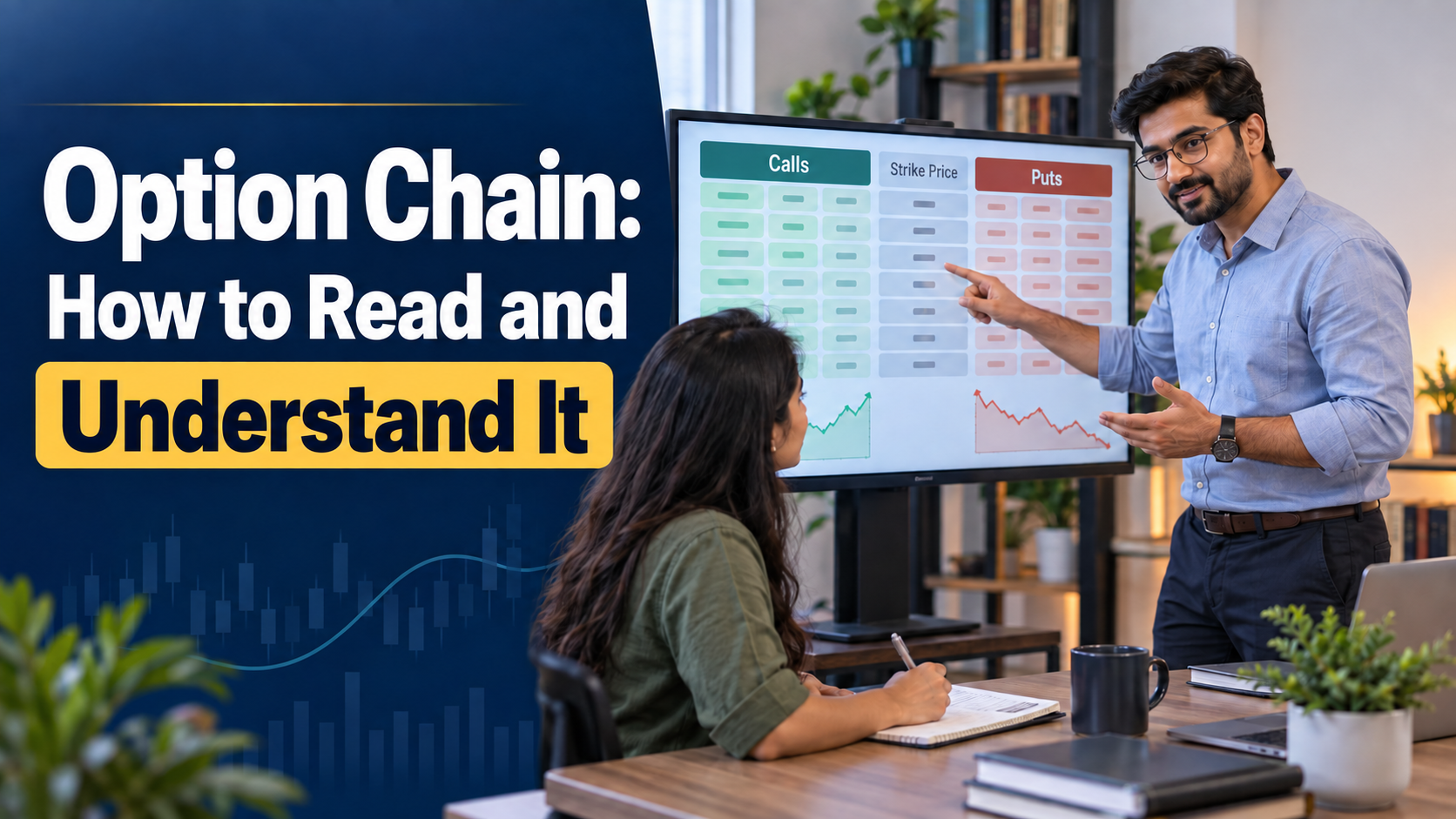
Learn what an option chain is and how to read call and put options, strike prices, open interest, volume, implied ....

Learn how GIFT Nifty works, its trading mechanism, impact on Indian stock markets, benefits, global influence, and why traders closely ....
Confused between weekly and monthly options expiry? Discover the key differences in theta decay, gamma risk, premium cost, and ideal ....

Learn what Open Interest is, how to read OI data with price and volume, and how to use it to ....
An increase in Securities Transaction Tax (STT) directly impacts F&O trading by affecting trading costs, option strategies, liquidity, and overall ....