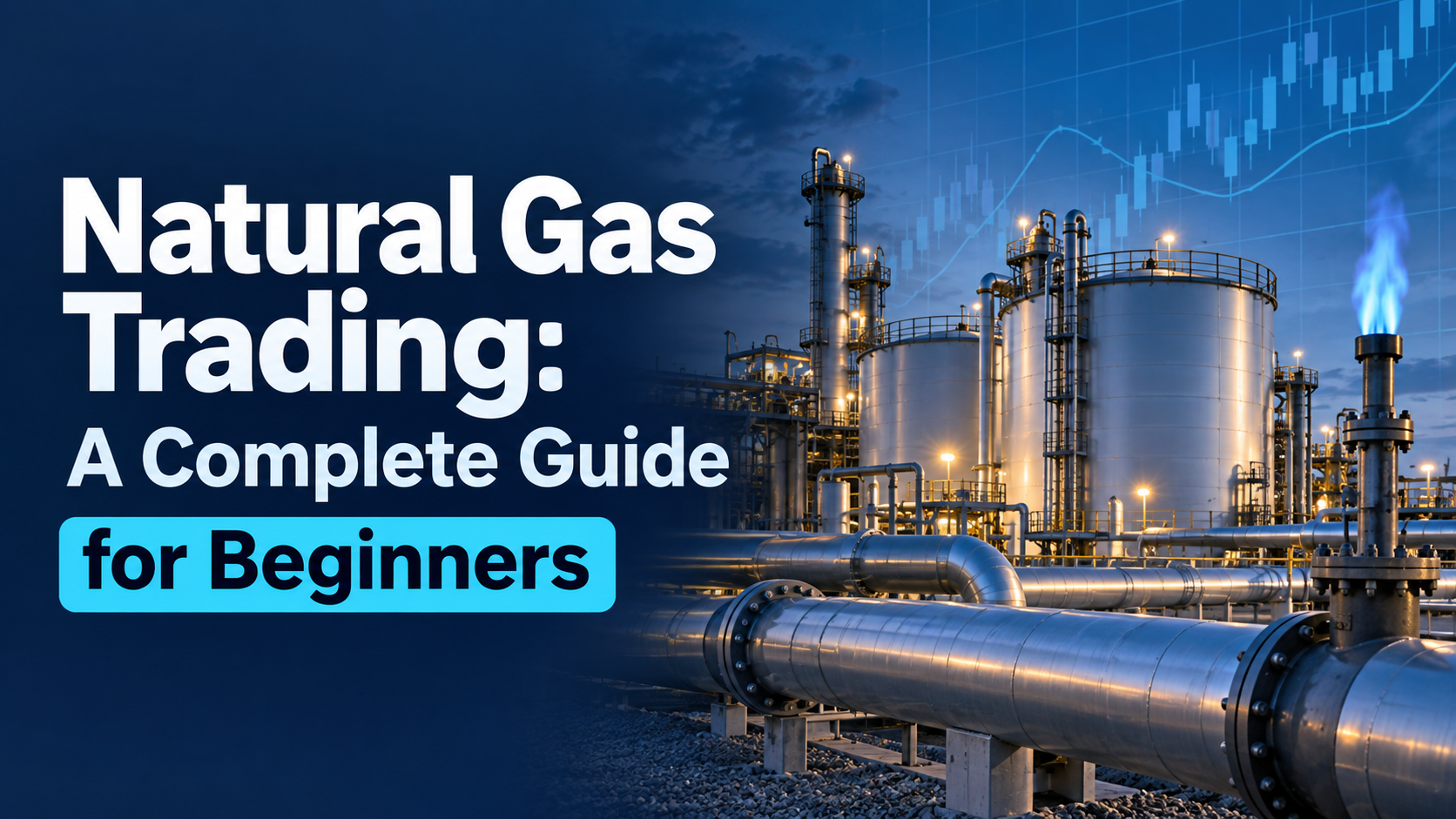
Natural gas is one of the world's most important energy commodities and an actively traded market for investors, businesses, and traders. It is widely used for electricity generation, heating, industrial production, and various manufacturing processes.
Unlike some financial assets, natural gas prices can be highly sensitive to changes in weather, storage levels, production, demand, and geopolitical conditions. These factors can create significant price movements, making natural gas an interesting but potentially volatile market.
In this guide, we will explain what natural gas trading is, how the market works, what influences natural gas prices, and the key risks traders should understand.
What Is Natural Gas Trading?
Natural gas trading involves buying and selling financial instruments linked to the price of natural gas. Traders can gain exposure to natural gas through instruments such as futures, options, exchange-traded products, or contracts for difference, depending on the market and jurisdiction.
Natural gas is different from crude oil because its supply and demand are strongly influenced by seasonal factors, particularly weather.
For example, a particularly cold winter can increase demand for natural gas used for heating. Similarly, extremely hot weather can increase electricity demand for air conditioning, which may also increase demand for natural gas-fired power generation.
How Does the Natural Gas Market Work?
Natural gas is produced from underground reservoirs and transported through pipelines or, after processing and liquefaction, as liquefied natural gas (LNG).
The market connects producers, utilities, industrial consumers, traders, and other participants.
Supply and Demand Balance
Natural gas prices are influenced by the balance between:
- Available supply + storage + imports
- Residential + industrial + power-generation + export demand
When demand exceeds available supply, prices may rise. When supply is abundant relative to demand, prices may fall.
This supply-and-demand relationship is the foundation of natural gas price movements.
Major Factors That Affect Natural Gas Prices
1. Weather Conditions
Weather is one of the most important factors in natural gas trading.
During winter, colder temperatures can increase heating demand. During summer, high temperatures can increase electricity consumption as households and businesses use more air conditioning.
Unexpected weather forecasts can therefore cause natural gas prices to move rapidly.
2. Natural Gas Storage
Storage data is closely watched by market participants.
Storage facilities help balance supply and demand throughout the year. During periods of lower demand, natural gas can be injected into storage, while withdrawals can occur when demand increases.
If inventories are significantly above or below historical levels, traders may interpret this as a signal about market conditions.
3. Production
Changes in natural gas production can have a major impact on prices.
Higher production can increase available supply and potentially put downward pressure on prices if demand does not increase at the same pace.
Production disruptions, maintenance, infrastructure problems, or unexpected declines can have the opposite effect.
4. LNG Exports
The growth of liquefied natural gas exports has increased the connection between regional natural gas markets and global energy demand.
When LNG export demand increases, more natural gas may be required for liquefaction and shipment, potentially affecting domestic supply-demand conditions.
Global energy conditions can therefore influence regional natural gas prices.
5. Economic Activity
Economic growth affects industrial energy consumption.
When manufacturing and industrial activity increases, natural gas demand may rise. During economic slowdowns, industrial consumption can weaken.
Economic conditions are therefore another factor that traders may monitor.
Natural Gas Trading Instruments
Natural Gas Futures
One of the most common instruments used for natural gas trading is the futures contract.
A natural gas futures contract represents an agreement to buy or sell natural gas at a specified price according to the contract's terms.
Futures are used by different types of market participants:
- Producers may use futures to hedge against falling prices.
- Consumers such as utilities or industrial companies may use futures to manage the risk of rising energy costs.
- Traders may use futures to speculate on expected changes in natural gas prices.
Because futures typically involve leverage and margin requirements, they can generate both significant gains and significant losses.
Natural Gas Options
Options provide another way to participate in the natural gas market.
A call option gives the buyer the right, but not the obligation, to buy the underlying asset at a specified strike price according to the contract terms.
A put option gives the buyer the right, but not the obligation, to sell at a specified strike price.
Natural gas options can be used for both speculation and risk management.
However, options have additional characteristics such as strike price, expiration, premium, implied volatility, and time decay, which traders need to understand before using them.
Natural Gas and Seasonality
One of the unique characteristics of natural gas is its strong relationship with seasonal demand.
Historically, winter can bring increased demand for heating, while summer can bring increased electricity demand.
This means traders often pay close attention to seasonal forecasts and expected changes in consumption.
However, seasonality is not a guaranteed prediction of price direction. Actual weather conditions, production, storage, and other market factors can produce outcomes that differ significantly from historical patterns.
How to Analyze Natural Gas Prices
Traders generally use a combination of fundamental and technical analysis.
Fundamental Analysis
Fundamental analysis focuses on the underlying factors affecting supply and demand.
Key Metrics to Monitor
Traders may monitor:
- Weather forecasts
- Storage inventories
- Production levels
- LNG exports
- Pipeline flows
- Power-sector demand
- Industrial consumption
- Economic conditions
The objective is to determine whether market conditions appear relatively tight or well supplied.
Technical Analysis
Technical analysis focuses primarily on price and trading data.
Common Technical Tools
Common tools include:
- Support and resistance
- Moving averages
- Trend lines
- Momentum indicators
- Chart patterns
- Volume
- Volatility measures
Technical analysis can help traders identify potential trends and levels of interest, while fundamental analysis can provide context for why the market may be moving.
Why Is Natural Gas Considered Volatile?
Natural gas prices can experience sharp movements because the market can be highly sensitive to changes in supply and demand.
A small change in weather forecasts, an unexpected production disruption, or a significant shift in storage expectations can alter market sentiment quickly.
This volatility can create opportunities for traders, but it also increases risk.
Traders using leveraged products should be particularly careful about position sizing and risk management.
Risks of Natural Gas Trading
Natural gas trading is not suitable for every investor or trader.
High Price Volatility
Prices can move quickly, sometimes in response to information that changes market expectations within a short period.
Leverage Risk
Futures and other leveraged instruments can magnify both profits and losses.
Weather Risk
Unexpected changes in weather can significantly affect demand forecasts.
Market Gaps
Prices may move sharply between trading sessions following major developments or changing expectations.
Expiration Risk
Futures and options have expiration dates and specific contract terms that traders must understand.
Proper risk management is therefore essential when trading natural gas.
Tips for Beginners
Beginners should first learn how the natural gas market works before committing significant capital.
A few important practices include:
- Understand the instrument you are trading.
- Monitor weather and storage data when analyzing fundamentals.
- Understand leverage and margin requirements.
- Use appropriate position sizing.
- Have a predefined risk-management plan.
- Avoid making decisions based on a single indicator.
- Practice with a demo or paper-trading environment before trading real money, where available.
Natural Gas Trading vs. Crude Oil Trading
Although both are major energy commodities, natural gas and crude oil have different market characteristics.
Crude oil is heavily influenced by global transportation demand, refinery activity, production decisions, and geopolitical developments.
Natural gas tends to have a stronger relationship with weather, heating demand, electricity generation, storage, and pipeline infrastructure.
Understanding these differences is important when developing a commodity trading strategy.
Final Thoughts
Natural gas trading offers exposure to one of the world's most important energy markets. Its prices are influenced by a complex combination of weather, production, storage, LNG exports, electricity demand, industrial activity, and broader economic conditions.
The market can provide opportunities for traders, but its volatility and the use of leverage can also create substantial risks.
For beginners, developing a strong understanding of supply and demand should come before attempting to predict short-term price movements. Combining fundamental research with technical analysis and disciplined risk management can help traders approach the natural gas market more systematically.