The Tempsens Instruments IPO is asking investors to balance two very different signals. On one side, a ₹220 grey market premium indicates a possible listing price of ₹520—73.33% above the ₹300 upper issue price. On the other, the company is already valued at 37.3 times FY26 earnings, leaving limited room for slower growth or execution problems.
Tempsens is not entering the Indian market with an untested business. It operates in industrial temperature sensing, electrical heating systems and specialised cables—technical categories with high qualification requirements and relatively strong entry barriers. The business is positioned to benefit from industrial automation and India’s manufacturing-indigenisation push.
The investment case is credible, but the price is demanding.
Overall recommendation: Apply with caution. Risk-tolerant investors may consider a limited application for listing gains. Long-term investors should apply only if they are comfortable with premium valuation, working-capital intensity and cyclical industrial demand.
A date clarification is necessary for readers arriving through older “Indian IPO 2024” searches: Tempsens Instruments is an August 2026 IPO. This review uses the 2026 offer dates, financial figures and market conditions.
Key Takeaways
- The ₹220 GMP suggests an estimated ₹520 listing price and a possible 73.33% gain, but GMP is unofficial and can reverse before listing.
- At ₹300, the IPO is valued at 37.3 times FY26 earnings; at the GMP-implied ₹520, the valuation would rise to approximately 64.7 times.
- Tempsens has a defensible position in industrial temperature sensing, supported by technical capabilities, customer approvals and a diversified projects-plus-MRO business.
- Rising inventory and receivable days make cash conversion one of the biggest risks for a two-to-three-year investor.
- Kantilal Chhaganlal Securities recommends subscribing for listing gains and long-term investment, while Swastika Investmart is positive but valuation-conscious.
- Retail investors should review the final QIB subscription, latest GMP and broader market conditions before bidding.
Why the Tempsens IPO Is Generating Interest
The Tempsens IPO opened on August 20 and closes on August 24. Shares are priced between ₹285 and ₹300, with a minimum lot of 50 shares. One retail lot therefore requires ₹15,000 at the upper price band.
The total IPO size is ₹650 crore. It includes a ₹95 crore fresh issue and a much larger ₹555 crore offer for sale by existing shareholders. Up to 50% of the net offer is reserved for qualified institutional buyers, while at least 15% is available for non-institutional investors and at least 35% for retail investors.
The basis of allotment is expected on August 25. Refunds and demat credits are scheduled for August 27, followed by a tentative BSE and NSE listing on August 28.
The reported GMP of ₹220 is the immediate attraction. At the upper price of ₹300, it points to an estimated listing price of ₹520. The premium reportedly moved between ₹65 and ₹220 over six sessions, showing rapidly improving unofficial-market sentiment.
Investors should keep that number in perspective. GMP trades outside recognised exchanges, and its transaction volume, participant quality and price discovery cannot be independently verified. It is useful for reading sentiment but unsuitable as the only reason to apply.
What Does Tempsens Instruments Do?
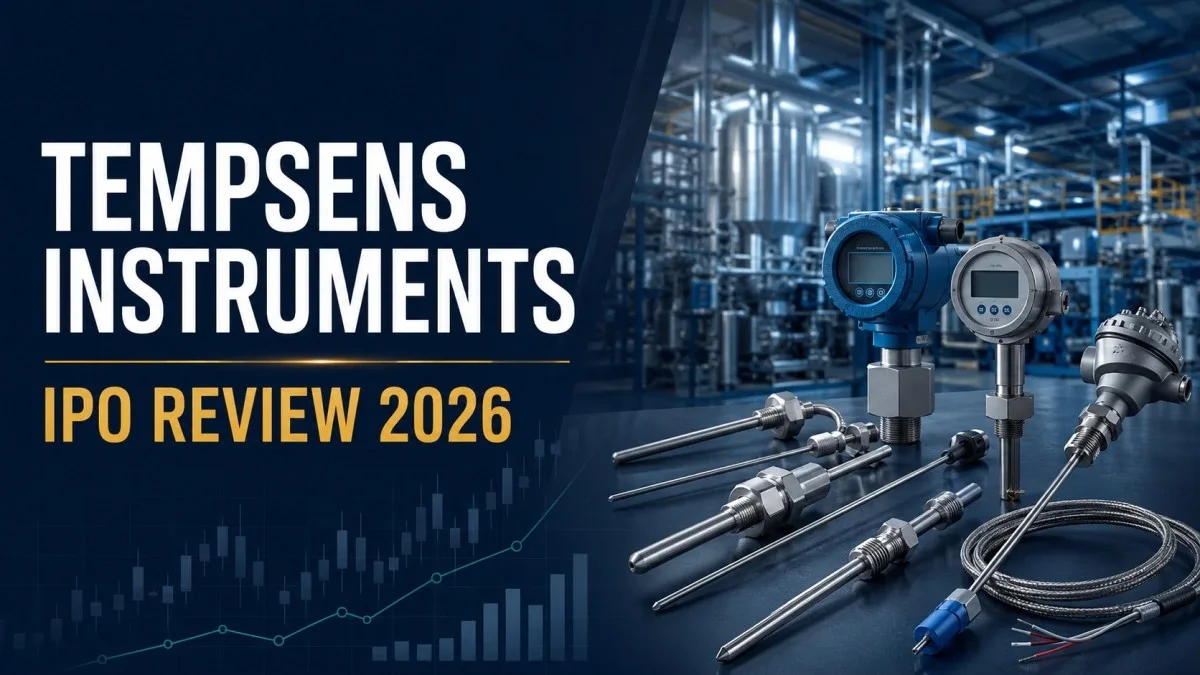
Tempsens Instruments manufactures customised temperature sensors, electrical heating solutions and specialised cables used in critical industrial operations.
According to the Frost & Sullivan report referenced in IPO research, Tempsens was India’s largest manufacturer of contact and non-contact temperature sensors by revenue as of March 31, 2026. It held an estimated 10.5% share of the domestic temperature-sensor market.
The company’s products include thermocouples, resistance temperature detectors, pyrometers, industrial heaters, furnaces and specialised instrumentation cables. These products are used in industries where inaccurate temperature readings can affect production quality, energy efficiency or safety.
Industrial customers generally evaluate these products on reliability, accuracy, customisation and operating performance—not simply on price. Qualification processes and long customer relationships create entry barriers that are more meaningful than in a commoditised electrical-products business.
Tempsens reportedly served more than 1,000 unique customers between FY24 and FY26 and exports to more than 80 countries. Approximately 29% of revenue comes from export markets, adding geographical diversification.
For investors searching for industrial temperature sensing stocks, Tempsens provides relatively rare exposure to this theme in the Indian listed market. That scarcity supports its positioning but creates a valuation problem: there is no direct listed peer with the same combination of sensors, heating systems and cables.
Click NowCan the ₹220 GMP Deliver a 73% Listing Gain?
A positive listing currently looks reasonably possible, but the full 73.33% indicated return should be considered an optimistic scenario rather than a forecast.
The rise in GMP supports sentiment. A reported move from ₹65 to ₹220 suggests that demand strengthened as the issue approached.
The anchor book adds another positive signal. Tempsens raised approximately ₹194.5 crore by allotting 64.84 lakh shares to 29 anchor investors. Participants reportedly included Temasek-owned Aranda Investments, Goldman Sachs, WhiteOak-linked funds and domestic mutual funds managed by HDFC, Nippon India, Kotak Mahindra, Aditya Birla Sun Life, Edelweiss and Tata.
Anchor participation does not guarantee a successful listing, but it shows that recognised institutions were prepared to invest at ₹300.
Final QIB subscription will provide a stronger signal. Retail and NII bids can build quickly during the early stages, while institutions often submit bids closer to closing. Live subscription figures were still changing when this analysis was prepared, so the final category-wise numbers could not be verified.
A disciplined retail investor IPO strategy should focus on three indicators together: GMP direction, final QIB demand and overall market sentiment.
Broader Market Conditions Could Change the Outcome
Indian equities entered the issue period with mixed momentum. The Nifty had declined for seven consecutive sessions, losing around 2.1%, as elevated crude prices and global bond yields weakened risk appetite.
The market recovered in early trading on August 20. The Nifty rose approximately 0.50% to 24,197.48, while the Sensex gained 0.66% to 77,431.57. This improvement followed steps by the US Treasury to reduce stress in global bond markets.
The recovery is helpful, but risks remain. Brent crude was still close to $92 per barrel amid geopolitical uncertainty. Higher oil prices can pressure the rupee, inflation and Indian equity valuations.
The ₹520 listing estimate could weaken if the GMP falls, QIB demand disappoints, crude prices rise further or the broader market corrects before August 28. A crowded IPO calendar may also divide available liquidity across multiple issues.
The evidence supports the possibility of a strong listing. It does not support treating 73.33% as an assured return.
Long-Term Investment Case: Can Growth Justify the Valuation?
Tempsens has delivered an encouraging financial record.
Between FY24 and FY26, revenue reportedly grew at a compound annual rate of 27.2%. EBITDA and PAT increased at CAGRs of 35.2% and 28.2%, respectively. The debt-to-equity ratio remained comfortable at approximately 0.2 times.
FY26 revenue from operations increased by approximately 17.5% to ₹444.9 crore from ₹378.5 crore in FY25. PAT rose by around 13.6%, from ₹62.6 crore to ₹71.1 crore.
The historical growth profile is healthy. However, the latest annual PAT growth was slower than the two-year CAGR, which matters when the IPO is priced at 37.3 times earnings.
The following data shows where the long-term opportunity and valuation risk meet:
| Metric | Reported position | Investor interpretation |
| Upper IPO price | ₹300 | Entry price for a cut-off application |
| FY26 post-issue P/E | 37.3x | Premium valuation requiring sustained growth |
| GMP-implied price | ₹520 | Unofficial listing estimate |
| FY24–FY26 revenue CAGR | 27.2% | Supports a growth premium if maintained |
| Implied P/E at ₹520 | Approx. 64.7x | Leaves very little room for earnings disappointment |
| FY26 PAT growth | Approx. 13.6% | Slower than the historical CAGR and important to monitor |
At ₹300, the valuation may be justified if Tempsens maintains strong double-digit earnings growth, protects its margins and converts profits into operating cash flow.
At ₹520, the implied valuation becomes far more difficult to defend. A P/E of approximately 64.7 times would price in several years of strong execution. Even a fundamentally healthy company can deliver weak shareholder returns if purchased at a valuation far ahead of earnings.
A long-term investor should therefore separate the decision to apply at ₹300 from the decision to continue holding if the stock lists near ₹520.
Why Industrial Automation and Indigenisation Matter
Tempsens is positioned in a part of the industrial automation value chain that is easy to overlook but operationally essential.
Accurate temperature measurement supports quality control, safety, energy efficiency and process automation across metals, petrochemicals, power, glass, engineering and other industries. As Indian factories modernise, demand may increase for sensors, specialised cables and electrical heating systems.
The company may also benefit from India’s attempt to localise industrial supply chains and reduce reliance on selected imported components. Its technical capabilities, established customer relationships and product qualification history could make it difficult for new entrants to compete quickly.
Its combination of project and maintenance, repair and overhaul revenue adds some resilience. New projects provide growth, while MRO requirements can generate recurring replacement, calibration and servicing demand.
However, exact future growth forecasts for the Indian industrial temperature-sensing market could not be independently confirmed from the available data. A favourable sector theme does not guarantee that Tempsens will capture growth at the same rate.
Learn to Evaluate IPOs Beyond the GMP
A listing premium can attract attention, but a sound IPO decision also requires an understanding of financial statements, valuations, cash flow, subscription categories and risk management.
ICFM India provides structured stock-market education covering fundamental analysis, technical analysis and practical market skills. Investors who want to strengthen their IPO analysis process can speak with ICFM India about a learning programme aligned with their current experience and educational goals.
ICFM India provides financial-market education. It does not offer personalised investment advice or specific buy-and-sell recommendations.
The Risks That Matter Most for a Two-to-Three-Year Investor
The first concern is working-capital intensity.
Inventory days increased from 76 in FY24 to 92 in FY26, while receivable days rose from 61 to 70. More cash is therefore being tied up in inventory and customer payments. Revenue and PAT can continue rising while operating cash flow remains under pressure.
After listing, investors should compare cash generated from operations with reported PAT. They should also watch whether inventory and receivables continue growing faster than revenue.
The second concern is customer and sector concentration. More than 40% of revenue reportedly comes from metal and petrochemical customers. A slowdown in either sector could affect orders, utilisation and margins.
The available public information does not provide enough detail to independently determine the exact revenue contribution of each major customer. The extent of single-customer exposure therefore remains uncertain.
Manufacturing concentration creates another risk. A substantial part of the company’s production is linked to Udaipur. Infrastructure disruption, logistics constraints, labour problems or extreme weather could affect output and delivery schedules.
Industrial cyclicality also matters. Manufacturing and process-industry capital expenditure does not grow evenly every year. Project delays can create volatility in order inflows even when the long-term sector outlook remains positive.
How Will the IPO Proceeds Be Used?
The ₹650 crore headline issue size should not be confused with capital entering the company.
The fresh issue is only ₹95 crore, representing approximately 14.6% of the total IPO. The remaining ₹555 crore, or about 85.4%, is an offer for sale and will go to existing selling shareholders.
Around ₹18.13 crore of fresh proceeds is intended for capital expenditure in electrical heating and specialised cable solutions, while ₹55 crore is earmarked for repayment or prepayment of borrowings.
Debt reduction can improve the balance sheet and lower finance costs. However, the modest capex allocation means investors should not expect the IPO alone to create a dramatic increase in production capacity.
A large OFS does not automatically make the issue unattractive, but it reduces the direct growth capital entering the business.
Comparative Context and Broker Recommendations
Kantilal Chhaganlal Securities recommends subscribing to the Tempsens IPO for both listing gains and long-term investment. It believes that niche leadership, strong technical capabilities and exposure to industrial automation can justify the premium valuation.
Swastika Investmart also sees potential for listing gains and considers the issue suitable for long-term investors comfortable with its valuation. The brokerage has highlighted healthy margins and the diversified projects-plus-MRO revenue mix while warning about working-capital intensity, Udaipur manufacturing concentration and sector cyclicality.
SBI Securities has recommended subscribing at the cut-off price, citing market leadership, export growth and a diversified business model. It specifically drew attention to rising inventory and receivable days.
Published P/E calculations are not completely uniform. Kantilal Chhaganlal Securities and SBI Securities cite 37.3 times FY26 earnings, while other research has calculated a post-issue multiple closer to 35.4 times. This may reflect differences in adjusted earnings or post-issue share-count assumptions.
The absence of a direct listed peer prevents a clean valuation comparison. Broker recommendations are informative, but they cannot establish a precise fair value for the company.
Should a Retail Investor Apply?
Apply: Investors with a high risk tolerance may apply if they want exposure to India’s industrial automation and manufacturing-indigenisation themes. This category can include listing-gain applicants who understand that GMP is unofficial and long-term investors willing to hold through cyclical periods.
Apply with caution: This is the most appropriate recommendation for the average interested retail investor. The company has a strong niche, but 37.3 times FY26 earnings is not cheap. A limited application is more prudent than making Tempsens a major portfolio commitment before it develops a listed-market track record.
Avoid: Investors should avoid the issue if they view the 73.33% GMP-based gain as guaranteed, plan to borrow for the application or cannot tolerate a sharp reversal in the unofficial premium. Valuation-conscious investors may prefer to wait for post-listing results and clearer operating cash-flow data.
The key distinction is investment horizon. A listing-gain investor is primarily betting on demand and sentiment. A two-to-three-year investor is betting on earnings growth, cash conversion, customer diversification and sustained industrial spending.
What to Check Before Applying
Before submitting a bid, verify the latest GMP and category-wise subscription numbers. Final QIB participation deserves more weight than early retail or NII demand.
Indian investors should also watch the Nifty, crude oil, the rupee and global bond yields. A negative external development between the issue close and August 28 could change listing sentiment quickly.
Decide your objective before applying. If the shares list near ₹520, the implied valuation would be substantially higher than the IPO valuation. A listing-gain applicant should reassess the position rather than automatically becoming a long-term investor.
A long-term holder should monitor revenue growth, EBITDA margins, operating cash flow, inventory days, receivable days, order execution and sector concentration after listing.
Click NowFinal Verdict
Tempsens Instruments offers a credible industrial business with technical entry barriers, established customer relationships, export exposure and a strong position in industrial temperature sensing.
The ₹220 GMP supports the possibility of a strong debut. Positive views from Kantilal Chhaganlal Securities and Swastika Investmart add weight to the investment case. However, the 37.3x FY26 P/E, rising working-capital requirements, customer and sector concentration, Udaipur manufacturing dependence and cyclical demand prevent an unconditional recommendation.
Retail investors may apply with caution at the cut-off price, preferably with a limited allocation. The IPO is best suited to risk-tolerant listing-gain applicants and long-term investors who believe Tempsens can sustain strong earnings growth. Conservative investors should consider waiting for post-listing results.
This article is for financial education only and does not constitute personalised investment advice. GMP and subscription figures are time-sensitive and should be checked again before applying.
Frequently Asked Questions About the Tempsens IPO
1. What are the Tempsens Instruments IPO dates?
The IPO opened on August 20, 2026, and closes on August 24. The basis of allotment is expected on August 25, with listing tentatively scheduled for August 28 on the BSE and NSE.
2. What is the price band and minimum investment?
The price band is ₹285–₹300 per share. The minimum lot is 50 shares, requiring ₹15,000 at the upper price.
3. What is the Tempsens IPO GMP?
The verified snapshot used in this analysis is ₹220. Added to the ₹300 upper price, it indicates an estimated listing price of ₹520. GMP is unofficial, unregulated and subject to rapid change.
4. Is the 73.33% listing gain guaranteed?
No. The percentage is calculated from the unofficial GMP. Actual listing performance will depend on final demand, market sentiment and conditions on August 28.
5. What are the main listing-day risks?
The most immediate risks are a decline in GMP, weak QIB subscription, a broader market correction, rising crude prices and reduced liquidity caused by multiple concurrent IPOs.
6. Is the 37.3x FY26 P/E justified?
It may be justified if Tempsens sustains strong double-digit earnings growth and healthy margins. The valuation is nevertheless demanding. At ₹520, the implied P/E would rise to approximately 64.7 times.
7. Why is working capital a concern?
Inventory days increased from 76 to 92 between FY24 and FY26, while receivable days rose from 61 to 70. This can cause cash generation to lag behind reported profits.
8. How serious is sector concentration?
More than 40% of revenue reportedly comes from metal and petrochemical customers. A slowdown in these industries could affect orders. Exact customer-level concentration could not be independently verified.
9. Does Tempsens have directly comparable listed peers?
No exact Indian listed peer has been identified with the same combination of temperature sensors, electrical heating systems and specialised cables. This makes fair-value comparison less precise.
10. What are the chances of retail allotment?
At least 35% of the net offer is reserved for retail investors. The final probability depends on valid retail applications and oversubscription. If heavily oversubscribed, allotment will follow the applicable lottery-based process, so no individual allocation can be guaranteed.