Why Is PB Fintech Share Price in Focus Today? Rebound After 36% Crash Explained

Apply Now

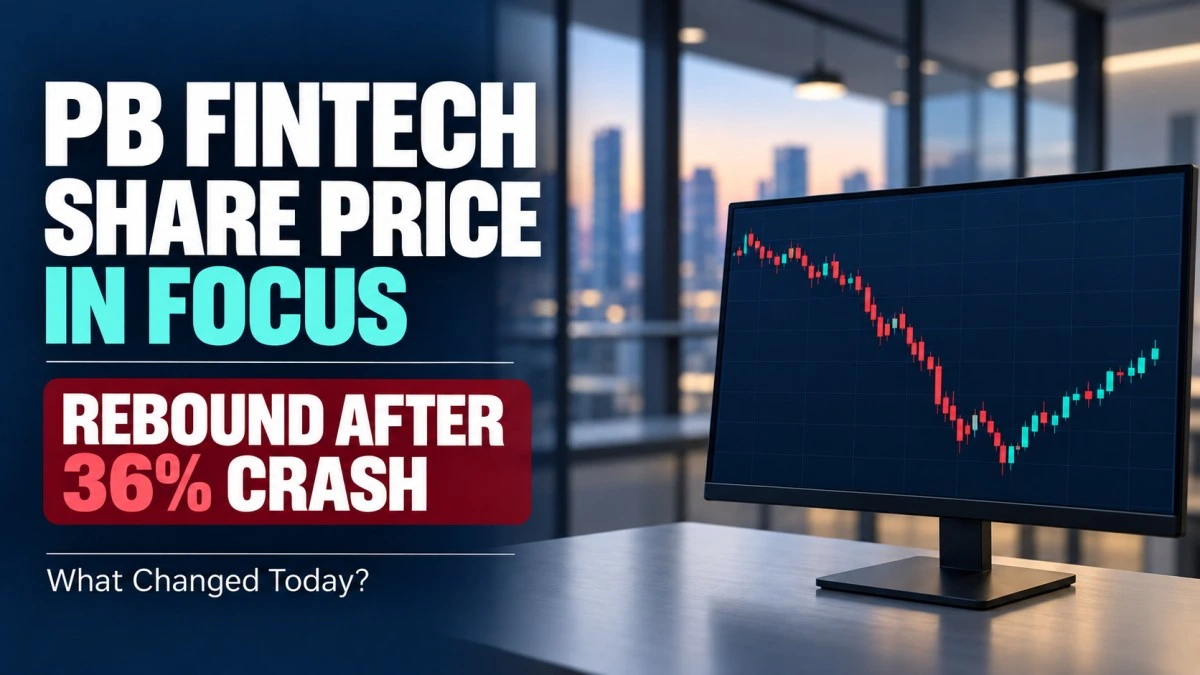
PB Fintech shares rose about 4% in early trade on Friday, 25 September 2026, a day after the Policybazaar parent crashed 36% on the NSE. The trigger for Thursday's fall was an IRDAI consultation paper proposing hard caps on insurance commissions and distribution expenses. Friday's recovery came after management told analysts it would cut costs and chase volumes rather than wait passively for the final rules.

The stock closed at ₹1,207.20 on 24 September, down from ₹1,886.30 a day earlier. That single session erased more than ₹31,000 crore of market value, the steepest one-day fall since the company listed in November 2021. Put simply, ₹1 lakh invested at Wednesday's close was worth about ₹64,000 by Thursday evening. On Friday morning the stock traded near ₹1,256 to ₹1,262 as bargain hunters stepped in. You can track the live price on the NSE quote page for POLICYBZR.

Key Takeaways

  • PB Fintech fell 36% to ₹1,207.20 on 24 September 2026, its worst single-day fall since listing, wiping out over ₹31,000 crore of market value.
  • The trigger was IRDAI's 23 September consultation paper capping distributor commissions, including 15% first-year and 5% renewal on individual health policies.
  • Shares rebounded about 4% in early trade on 25 September after management outlined cost cuts, 15% to 20% volume growth expectations and a possible move into insurance manufacturing.
  • Management expects little impact on FY27 results but flagged FY28 as a volatile transition year. Life insurance is less exposed than general insurance.
  • Brokerage targets now range from ₹1,150 (HSBC, Motilal Oswal) to ₹1,560 (Haitong), with Jefferies at Buy and ₹1,540.
  • The rules are a draft. Comments close on 25 October 2026, and the final caps will decide the earnings outlook.

Why did PB Fintech shares crash 36% on 24 September?

PB Fintech fell 36% because IRDAI proposed capping the commissions that insurers pay distributors like Policybazaar. The regulator released its consultation paper on "Recalibrating Economics of Insurance Distribution" on 23 September 2026 on the IRDAI website. By Thursday's open, the market had priced in the damage.

The stock opened about 10% lower at ₹1,697.70 and kept sliding. Selling intensified in the afternoon, with roughly 88% of the day's volume changing hands after 2:15 PM. Total volume hit 2.73 crore shares, about 19 times the usual daily average, according to Marketcalls.

What exactly did IRDAI propose?

The paper sets product-level ceilings on what distributors can earn. For online platforms, health insurance takes the sharpest cut.

Commission caps by product

ProductProposed cap for distribution entities
Individual health (first year)15%
Individual health (renewal and portability)5%
Pure term, multi-year premium25% first year, 7.5% renewal
Individual life, 10+ year premium term20% first year
Motor own-damage5%
Motor third-partyZero
Click Now

Expense of management limits and conduct rules

IRDAI also wants overall expense of management (EoM) for life insurers capped at 15% of gross direct premium within two years and 12.5% within five. General insurers would move from 30% to 20% over five years. Insurers and large distributors would have to publish their commission structures, and sales contests and travel rewards would be restricted.

The proposal is not final. Stakeholders can submit comments until 25 October 2026.

How did other insurance stocks react?

PB Fintech was not alone. Turtlemint Fintech hit its 20% lower circuit at ₹109.04. Max Financial Services fell 9.8%, HDFC Life dropped 6.2% and ICICI Prudential Life lost 4.1%, according to

How much did PB Fintech share price fall and recover?

Date and time (IST)EventPrice (NSE)ChangeContext
25 Sep 2026, about 9:40 AMRebound after analyst call₹1,256 to ₹1,262+4% to +4.5%Recovered after a weak, gap-down open
24 Sep 2026, closeCrash day close₹1,207.20−36.0%52-week low; about ₹31,000 crore of market value erased; market cap about ₹55,860 crore; 2.73 crore shares traded (19.2x average), 88% after 2:15 PM
24 Sep 2026, openGap-down open₹1,697.70−10%Opened at the lower price band
23 Sep 2026, closePre-crash close₹1,886.30BaselineIRDAI consultation paper released
9 Mar 2026Previous 52-week low₹1,364ReferenceThursday's close was 11.5% below it

Even after Friday's bounce, the stock sits roughly a third below where it traded on Wednesday. By Thursday's close it was already down 33.2% for 2026, against an 11.8% fall in the Nifty 50.

Could you have read this move before it happened?

A 36% fall in one session rarely comes from nowhere. Regulatory filings, volume spikes and price-band behaviour all carried signals on 23 and 24 September. Learning to read them is a skill, and it can be taught.

ICFM India's stock market courses cover technical analysis, derivatives, risk management and how regulatory news moves stock prices, with certification on completion.

Talk to an ICFM counsellor about the right course for you →

Why do insurance commission changes hit PB Fintech harder than insurers?

Policybazaar earns the bulk of its insurance revenue as commission from insurers on every policy sold through its platform. Cap that commission, and revenue per policy falls immediately, while advertising and call-centre costs stay where they are.

Health insurance is the pressure point. First-year health commissions for distributors have run around 30%, according to Upstox. The draft halves that.

There is a consumer side to this story too. If insurers spend less on distribution, part of that saving could reach buyers as lower premiums. PB Fintech management said it may pass cost benefits on to customers to win more volume.

What did PB Fintech management tell analysts on 25 September?

Management laid out its response at an analyst meet on Friday morning:

  • Life insurance is less exposed. Co-founder and CEO Yashish Dahiya said the proposals should not hit life insurance significantly. General insurance faces a larger impact.
  • FY27 looks safe, FY28 does not. The company does not expect fiscal FY27 (April 2026 to March 2027) results to be materially affected. It called FY28 a likely volatile transition year.
  • Growth at any cost is over. The strategy shifts to "rationalised growth", with lower marketing spend and slower hiring. Policybazaar CEO Sarbvir Singh said there are no plans for mass layoffs.
  • Volume can partly offset rate. Management expects volumes to grow about 15% to 20% as cheaper distribution is passed on to customers.
  • Manufacturing is on the table. Management called the proposals "quite extreme" and said its large customer base would help if it moved into underwriting insurance itself. It will wait for regulatory clarity before deciding.

Investors took the call as a sign that management had a workable response. That shift in tone, more than any change in the numbers, explains why the stock bounced on Friday.

What is the brokerage outlook for PB Fintech after the crash?

Brokerages cut targets across the board, but they split sharply on what comes next.

PB Fintech target prices by brokerage

BrokerageRatingNew targetOld target
Haitong InternationalNot disclosed₹1,560₹2,080
JefferiesBuy₹1,540₹2,050
BofA SecuritiesNeutral₹1,410Not disclosed
HSBCHold (downgraded)₹1,150₹2,100
Motilal Oswal (MOFSLNeutral₹1,150Not disclosed

The bull case: Jefferies

Jefferies kept its Buy call but cut its valuation multiple by 30% to 18 times FY30 EBITDA, citing uncertainty over take rates. Its bear-case value is ₹1,030 and its bull case ₹1,620, according to Business Today. Jefferies also flagged a company disclosure that non-life NPV could fall to 33% to 40% of its original value under the draft rules.

The bear case: HSBC and Motilal Oswal

HSBC cut its FY28 EPS estimates by 56% and FY29 by 17%. Motilal Oswal sees a roughly 30% hit to FY28 core online insurance revenue. In its downside scenario, earnings fall by up to 46%, and a 20% cut in staff and advertising costs would limit the hit to about 30%. Emkay Global warned that the cuts could make insurance distribution "an unviable business", as quoted by Business Today.

Technical levels to watch

On the charts, Ravi Singh of Master Capital Services put near-term support at ₹1,250 and resistance at ₹1,420. AR Ramachandran of Tips2trades saw resistance at ₹1,590. The stock closed below that support level on Thursday. To learn how analysts set levels like these, see ICFM's technical analysis course.

What should PB Fintech investors watch next?

The single date that matters is 25 October 2026, when IRDAI's comment window closes. Until then, the stock will likely trade on headlines about how hard insurers and distributors push back.

  1. Industry pushback. Distributors, brokers and insurers will lobby for softer caps or a longer glide path. Any sign that IRDAI is open to changes would support the stock.
  2. The final regulation. The consultation paper is a draft. The final caps, and how fast they phase in, will set PB Fintech's earnings path for FY28 and beyond.
  3. Q2 FY27 results. The July to September 2026 quarter numbers will show whether cost cuts have started and how management frames guidance.
  4. Insurer margins. If commission savings lift insurer profitability, insurers may compete harder on price, which could help platform volumes.
  5. Volatility. Moves this large in back-to-back sessions point to wide swings ahead. Position sizing and stop-losses matter more than usual.

For long-term holders, the question is whether Policybazaar can grow volumes fast enough to replace lost take rates. For traders, the stock now trades on regulatory news and will move on every update from IRDAI.

What does the PB Fintech crash teach traders and investors?

The PB Fintech crash shows that one regulatory document can reprice a stock faster than any earnings report. Five lessons stand out for anyone trading Indian equities.

1. Regulatory risk is business-model risk

A single IRDAI consultation paper took about a third off PB Fintech's value in one session. Traders who track releases from IRDAI, SEBI and RBI see these risks before the opening bell.

2. Volume tells you who is selling

Thursday's volume ran far above normal, and the bulk of it came in the final 75 minutes of trade. Heavy late-session selling often reflects large institutional orders. Reading price and volume together is a core part of technical analysis.

3. Stop-losses do not protect you from gaps

The stock opened 10% lower on Thursday. A stop-loss placed 5% below Wednesday's close would have filled near the open, not at the stop price. Hedging with options is one way to manage gap risk, a topic covered in ICFM's Certified Derivatives Trader Program.

4. Position size decides survival

A 36% single-day fall is survivable when the stock is 3% of a portfolio. It is painful at 30%. ICFM's market crash course looks at how traders protect capital during sharp sell-offs.

5. Analyst targets are ranges, not promises

Jefferies alone spans ₹1,030 to ₹1,620 across its bear and bull cases. Understanding the valuation logic matters more than the headline target.

Frequently asked questions

1. Why did PB Fintech share price fall 36%?

PB Fintech share price fell 36% on 24 September 2026 because IRDAI proposed capping the commissions insurers pay to distributors such as Policybazaar. The draft, released on 23 September, limits first-year health insurance commissions to 15% and renewals to 5%. Since commissions are Policybazaar's main revenue source, investors cut their earnings expectations sharply. The stock closed at ₹1,207.20 on NSE, down from ₹1,886.30.

2. Why is PB Fintech share price rising today?

PB Fintech shares rose about 4% in early trade on 25 September 2026 after management held an analyst meet. The company said FY27 results should not be materially affected. It also said it would cut marketing costs and slow hiring, expects volumes to grow 15% to 20%, and may consider insurance manufacturing. The rebound reflects bargain buying after an oversold session, not a change in the regulatory proposal.

3. What is the IRDAI consultation paper on insurance distribution?

The IRDAI consultation paper, titled "Recalibrating Economics of Insurance Distribution", proposes product-level caps on insurance commissions and lower expense-of-management limits. Life insurers would be capped at 15% of gross direct premium within two years and 12.5% within five. General insurers would move from 30% to 20% over five years. The paper also restricts sales contests and bans dark patterns on insurance websites. Comments are open until 25 October 2026.

4. How will the insurance commission changes affect Policybazaar's revenue?

The insurance commission changes would cut the revenue Policybazaar earns per policy, especially in health and motor insurance. Motilal Oswal estimates a roughly 30% hit to FY28 core online insurance revenue, with earnings down as much as 46% before cost cuts. PB Fintech's own disclosure suggests non-life NPV could fall to 33% to 40% of its original value. Life insurance is expected to be less affected.

5. Is the IRDAI commission cap final?

No. The IRDAI commission caps are proposals in a consultation paper, not final regulations. Insurers, distributors and the public can send feedback until 25 October 2026. IRDAI may change the caps, the timeline or both before issuing final rules. The paper already proposes a phased glide path of up to five years for expense limits.

6. What is the PB Fintech target price after the crash?

Brokerage target prices for PB Fintech now range from ₹1,150 to ₹1,560. Haitong International has the highest at ₹1,560, followed by Jefferies (Buy) at ₹1,540 and BofA Securities (Neutral) at ₹1,410. HSBC downgraded the stock to Hold with a ₹1,150 target, down from ₹2,100, and Motilal Oswal (Neutral) also has ₹1,150. Target prices are opinions and can change as the regulation evolves.

7. Should I buy PB Fintech shares after the 36% crash?

Whether to buy PB Fintech after the crash depends on your risk appetite and time horizon, and this article is not investment advice. Bulls such as Jefferies argue the fall has priced in the worst case. Bears such as HSBC see a 56% cut to FY28 EPS and limited upside. Share price volatility will likely stay high until IRDAI issues final rules, so consult a SEBI-registered investment adviser before acting.

8. Which other stocks fell after the IRDAI proposal?

On 24 September 2026, Turtlemint Fintech hit its 20% lower circuit at ₹109.04. Max Financial Services fell 9.8%, L&T Finance dropped 9%, HDFC Life lost 6.2% and ICICI Prudential Life slipped 4.1%. ICICI Lombard rose 5.1%, as investors expected lower commissions to improve general insurer margins. The Nifty 50 fell 1.64% the same day.

9. Will PB Fintech start its own insurance company?

PB Fintech has not decided. On 25 September 2026, management said lower distribution commissions could change the economics of its business and that insurance manufacturing is an option. It said its large customer base would be an advantage, but it will wait for regulatory clarity before making any move.

10. What is the outlook for PB Fintech stock?

The near-term outlook for PB Fintech stock depends on IRDAI's final rules. Management expects FY27 to be largely unaffected and FY28 to be a volatile transition year, with cost cuts and 15% to 20% volume growth partly offsetting lower commissions. Brokerages are split between Buy, Neutral and Hold. Investors should track the 25 October comment deadline, Q2 FY27 results and any revisions to the draft.

Disclaimer: This article is for information and education only. It is not a recommendation to buy, sell or hold any security. Share prices quoted are from published reports and may differ from live NSE and BSE quotes. Consult a SEBI-registered investment adviser before making investment decisions

Read by 0 Visitors
Lakshay Jain
About author

Mr. Lakshay Jain is a professional trader and Director – Operations with experience in US equity and proprietary trading. Through stock market blogs and news updates, he shares practical insights on market trends, trading discipline, risk awareness and real-time market updates, helping serious readers understand trading with clarity, confidence and discipline.


Download ICFM APP

Stock Market courses App