
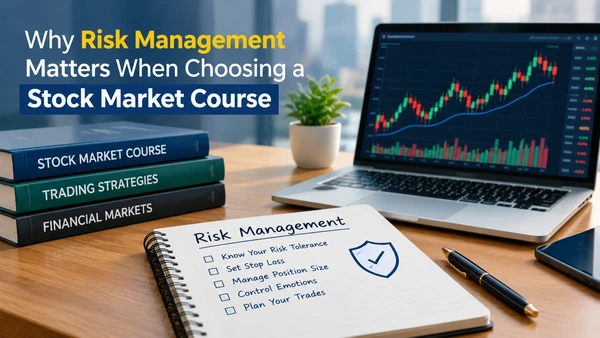
Most beginners walk into the market looking for the next winning trade. They watch charts, follow tips, and wonder how some people seem to catch every move. What almost nobody thinks about early on is the less exciting question, how much can I lose, and what happens if I’m wrong?
That question is where risk management starts, and it’s why a good stock market course should spend as much time on protecting your money as on finding opportunities. A solid course teaches you to size up risk, plan a trade before you place it, limit your losses, and make decisions with a clear head instead of a nervous one. ICFM Stock Market Institute builds its stock market education around this idea, understanding the market first, then acting with discipline.
Nobody can promise profits on every trade. Prices move because of company news, economic data, global events, or plain market mood, and sometimes for no reason anyone can explain. Learning to live with that uncertainty makes you a more realistic trader. It matters even more if you’re a student, a working professional, or someone juggling part-time work, because you’re learning around other commitments and can’t afford to treat your savings casually.
What Should a Stock Market Course Teach About Risk?
The best courses explain risk in plain language, with examples you can follow. You should come away knowing how much you can afford to risk, how to judge whether a trade is worth taking, and why you should decide your exit before you enter.
Take the risk-reward ratio. If you plan to risk ₹500 to make a possible ₹1,000, your ratio is 1:2. It doesn’t mean the trade will work. It just gives you a way to compare opportunities instead of going on gut feeling.
Position sizing is just as important. It tells you how many shares you can reasonably trade based on your capital, how far away your stop-loss is, and how much loss you’re comfortable with. A good course will also cover diversification, trading costs, liquidity, slippage, and the dangers of leverage. And it should be honest that a stop-loss isn’t a perfect shield. In fast or happy markets, your order can fill at a price quite different from the one you expected.
Skills You Can Build Through Risk Management Training
- Capital protection: Setting financial limits and never risking money you need for rent, bills, or family expenses.
- Position sizing: Linking your trade quantity to your capital, stop-loss distance, and risk tolerance.
- Stop-loss planning: Deciding in advance where you’ll get out if a trade goes against you.
- Risk-reward analysis: Weighing possible loss against possible gain before you commit.
- Trading psychology: Spotting fear, greed, impatience, and the urge to win back losses with a rushed trade.
- Market analysis: Reading charts, trends, support and resistance, and shifts in volatility.
- Leverage awareness: Understanding that borrowed exposure magnifies losses just as it magnifies gains.
- Trading discipline: Keeping a journal, sticking to a plan, and reviewing your mistakes honestly.
How ICFM Supports Different Kinds of Learners
| Learner Type | What They Need | Skills They Build | How Risk Management Helps |
| Students | Practical money skills that fit around their studies | Market terms, chart reading, support and resistance, trend analysis, evaluating trades | Shows what losses look like, lets them practise with simulated trades, and teaches capital protection before real money is involved |
| Working Professionals | Market knowledge that fits around office hours, commutes, and family | Market research, financial analysis, discipline, time management, informed decisions | Encourages planning trades in advance, setting risk limits, avoiding impulsive moves, and recognising the risks of not watching the market all day |
| Part-Time Workers | A manageable pace that works with shifting schedules | Market basics, price analysis, building trading plans, assessing risk | Helps avoid borrowing to trade, risking essential savings, or raising trade sizes to recover losses |
| Beginners | A strong base before entering live markets | Core concepts, understanding investment risk, chart reading, evaluating strategies | Builds the habit of practising on historical charts or simulations and understanding position sizing and stop-losses first |