
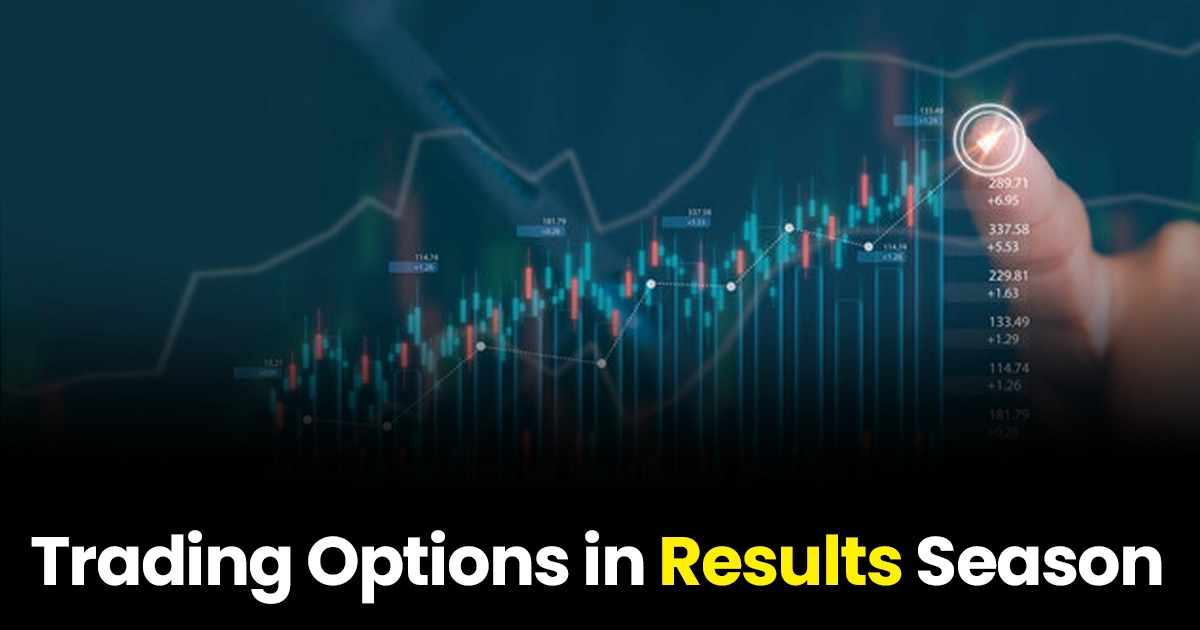
For options traders, results season is one of the most exciting and dangerous times of the year. The stock price can change a lot in either direction when a company is about to announce its quarterly earnings. That gives you a chance, but it also makes things riskier because prices don't just react to the numbers; they also react to what management says, future guidance, sector trends, and what the market thinks will happen. In options trading, the season for results is important because implied volatility tends to go up before the announcement and then drop sharply after it.
This blog talks about how options act around earnings, what strategies traders often think about, and how managing risk becomes more important than making predictions.
Why options move so much during results season
Traders often buy options before results to make money off of a big move. Due to this demand, option premiums can get very high. This is especially true for contracts that are at-the-money and close to the date of the announcement.
Most of the time, the market is trying to figure out how big and how fast the move will be. If people expect a lot, even good numbers might not make the stock go up much. Weak expectations can also sometimes cause a smaller-than-expected drop.
After the results are announced, implied volatility usually goes down. This is what people call "volatility crush." Even if the stock moves in the right direction, it can still hurt option buyers because the time value may fall faster than the move can help.
Common ways to trade
1. Buying a call or a put
Some traders buy a call when they think things will go well and a put when they think things will go badly. This is the easiest way to do it, but it also has the highest risk of losing value. The stock has to move a lot and quickly enough to make up for the premium paid.
2. Getting a straddle or strangle
When you straddle, you buy both a call and a put at the same strike price. When you strangle, you buy them at different strike prices. Traders use these strategies when they think the market will move a lot but don't know which way it will go. The problem is cost: options during earnings season are usually expensive, so the move after earnings has to be big enough to make the setup worth it.
3. Selling high-end
Experienced traders sometimes sell options before results come out to take advantage of the drop in implied volatility. You can do this with short straddles, short strangles, credit spreads, or iron condors. These strategies might work well if the trader thinks the stock won't move much, but they also have a lot of risk if the stock moves a lot.
4. Using spreads instead of options without any risk
A lot of traders like debit spreads or credit spreads because they lower costs and limit risk. A trader might use a bull call spread if they think the market will go up a little, and a bear put spread if they think it will go down a little. During results season, spreads are often better than buying one expensive option.
Things to look at before making a trade
· Expected move: Look at the option premium and the market's implied move for the stock.
· Reactions to past results: Look at how the stock has acted in previous quarters. Some names move a lot every time, while others stay the same.
· Open interest and liquidity: A liquid option chain makes it easier to get in and out.
Event timing: Be sure to know the exact date and time of the event, as well as whether the announcement will be made during market hours or after they close.
Sector mood: Sometimes the sector has more of an effect on how the stock reacts than the company itself.
A simple rule for managing risk
Don't trade during results season just because you "feel" the stock will move. Before you enter the trade, make sure you know how much risk you are willing to take, how big your position should be, and what your exit plan is. If you pay too much for the option or if the move happens slower than you thought it would, you could still lose money even if you make the right call.
It makes sense to only risk a small part of your trading capital on event trades. A lot of traders also avoid holding big positions through the announcement of the results because gaps can go past stop-loss levels.
Best ways to do things for beginners
· Begin with paper trading or very small amounts of money.
· Like strategies with clear risks, like spreads.
· Don't choose options that aren't liquid and have wide bid-ask spreads.
· Don't think that good news always means that stock prices will go up.
· Don't just pay attention to direction; also pay attention to volatility.
Final Thoughts
During results season, options traders can find great chances, but they shouldn't bet without knowing what they're doing. The real edge comes from knowing what implied volatility is, how much movement is expected, how much premium to pay, and what the risks are of a volatility crush. Traders who understand risk and plan their trades are usually better off than those who just guess what will happen. In the end, it's often more important to get through results season than to be aggressive during it.
This article is not financial advice; it is only for educational purposes.

Comments
Related posts

Positional trading means holding a trending stock for weeks or months instead of hours. This guide follows one trade week ....

Momentum trading means trading in the direction of a strong, confirmed price move. This guide explains how it works with ....
SEBI's FY2022–FY2024 study found that 93% of individual F&O traders incurred losses. This guide explains what a derivatives curriculum needs ....

Most beginners start with YouTube videos and end up more confused than when they began. The best stock market course ....

Compare online vs offline stock market courses based on flexibility, practical training, mentorship, cost and learning support. Discover which learning ....