Most people hear about futures and options from a friend who made money on expiry day. They rarely hear about the friend who lost a month's salary on the same trade. That gap is exactly why learning derivatives properly matters.
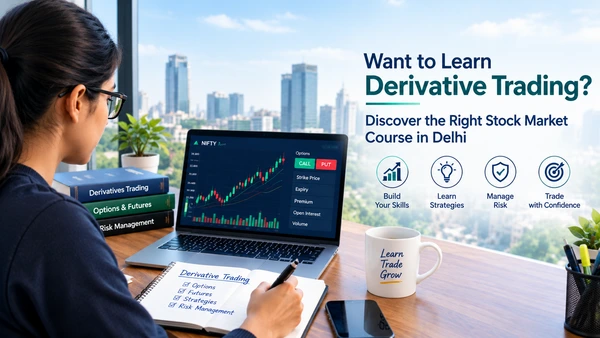
Knowing when to buy or sell isn't enough. You need to understand what you're trading, how the contract behaves, and how much you can lose if things go wrong. Whether you're a student, a working professional or someone working part-time, the right course gives you that foundation before real money is involved. If you're looking for the best stock market course in Delhi, this page explains what a good one should cover.
ICFM – Stock Market Institute teaches the markets in a structured way, and it's upfront about one thing, it doesn't hand out trading tips. The focus is on helping you make your own decisions with some understanding behind them.
What Is Derivative Trading, and Why Learn It?
A derivative is a contract whose value depends on something else, such as a stock or an index. In India, the two you'll hear about most are futures and options.
People use them for different reasons. Some use them to protect a portfolio they already hold. Some use them to reduce their exposure to the market. Others simply take a view on where the market is heading and trade on it.
As a beginner, you don't need to master everything on day one. Start by understanding how contracts work, why their prices move, and how experienced traders think about risk. Learn early that leverage works in both directions. It can magnify your gains, but it can magnify your losses just as easily. And no amount of chart reading can promise you a profit.
The best way to learn is in order. Start with stock market basics, then move to futures, options, technical analysis and risk management.
What Skills Will You Build?
A well-structured Derivative Trading course can help you build financial market knowledge and develop analytical skills through theoretical study and practical exercises. The following skills are useful for understanding derivatives and evaluating trading scenarios.
| Skill | What you'll learn | Why it matters |
| Market analysis | Reading price charts, spotting trends, and finding support and resistance levels | You can make sense of price movement instead of guessing |
| Futures and options | Contracts, expiry, lot sizes, premiums and margins | This is the base everything else sits on |
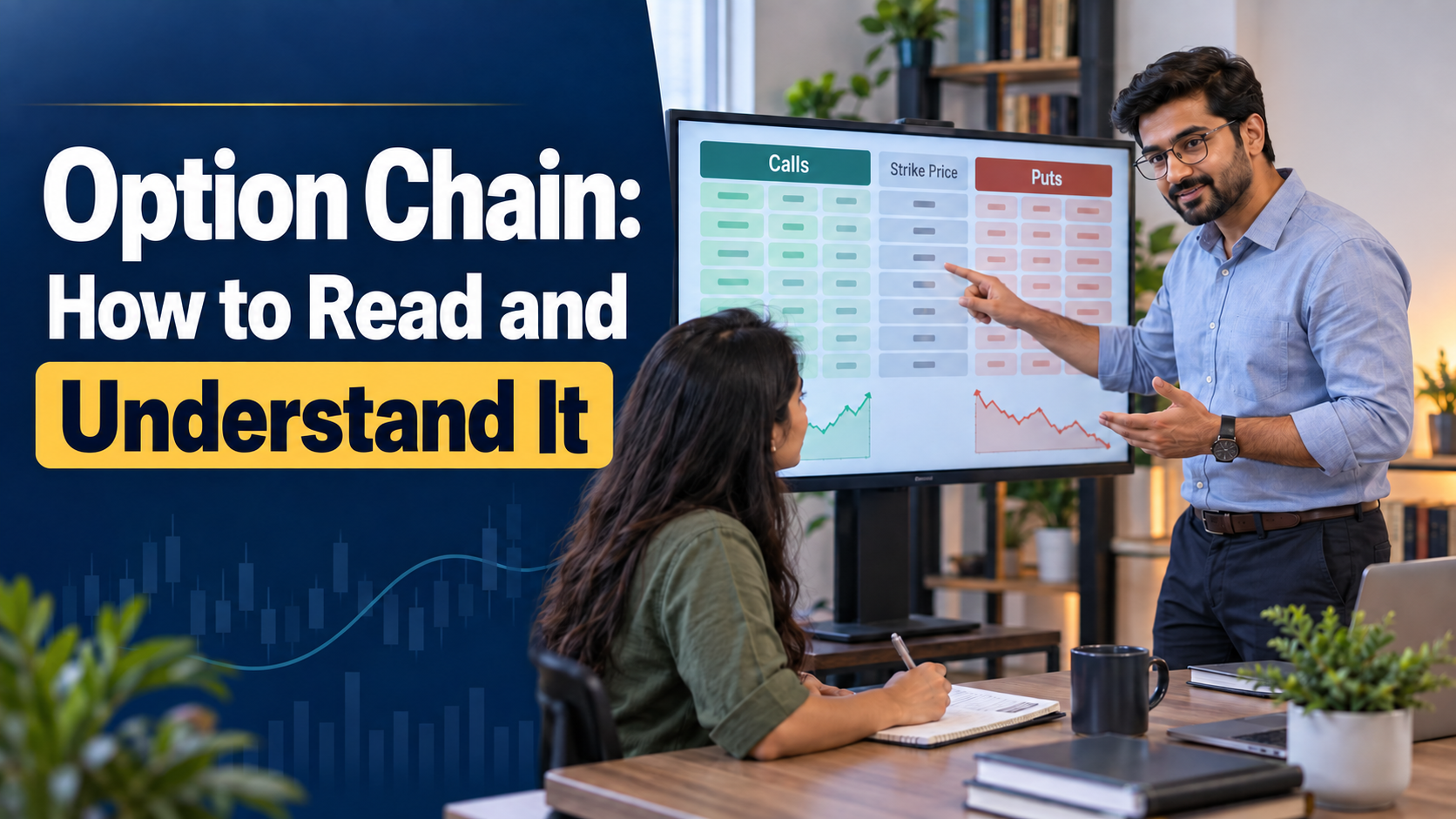
| Option-chain analysis | Open interest, volume, strike prices and how open interest changes | You can see where market activity is concentrated |
| Technical analysis | Price action, chart patterns and indicators | Your research follows a method, not a mood |
| Risk management | Leverage, position sizing, stop-loss planning and possible losses | You know how much you're putting at risk before you enter |
| Trading discipline | Spotting emotional decisions and avoiding impulsive trades | You stick to a plan, even on a bad day |
How to Build These Skills, Step by Step?
Learning derivatives is easier when you take it one stage at a time. It's the one ICFM follows in its teaching.
Step 1: Get the basics right. Start with what futures and options are and how their prices depend on the underlying stock or index. Spend time on contract specifications, lot sizes, margins and expiry dates. It feels slow, but everything later depends on it.
Step 2: Learn to read charts. Study price charts, support and resistance, price action and common indicators. The aim isn't to predict the market. It's to understand what price is doing and what scenarios are possible.
Step 3: Move on to options and the option chain. This is where most beginners get stuck. Work through call and put options, strike prices, premiums, open interest, volume and implied volatility. Once these click, option pricing stops looking like a puzzle.
Step 4: Practise without risking real money. Use historical charts, worked examples and simulated trades to see how contracts behave when the market is calm, volatile or moving sideways. You can make plenty of mistakes here, and they cost you nothing.
Step 5: Learn to manage risk. Cover stop-loss planning, position sizing, leverage and the size of potential losses. Derivatives carry real financial risk, and profits are never guaranteed. This step is the one people skip, and it's usually the one they regret skipping.
Why Learn Derivatives at ICFM?
Picking an institute is a big decision, and it's worth asking what you'll actually get for your time and money. Here's what ICFM offers:
- A structured path. You start with the basics and work towards advanced topics, without being thrown into complex strategies in week one.
- Core F&O knowledge. You'll cover futures contracts, call and put options, strike prices, premiums, expiry dates and the other concepts you'll use every day.
- Technical analysis. You'll learn to read charts, trends, support and resistance, and indicators with a clear method.
- Practical examples. Real market examples and simulated trading exercises show you how contracts behave in different conditions.
- Risk awareness from the start. Leverage, position sizing, stop-loss planning and losses are part of the teaching, not an afterthought.
- Options for different schedules. Students, working professionals and part-time learners or anyone can ask about course formats and timings to find something that fits their routine.